
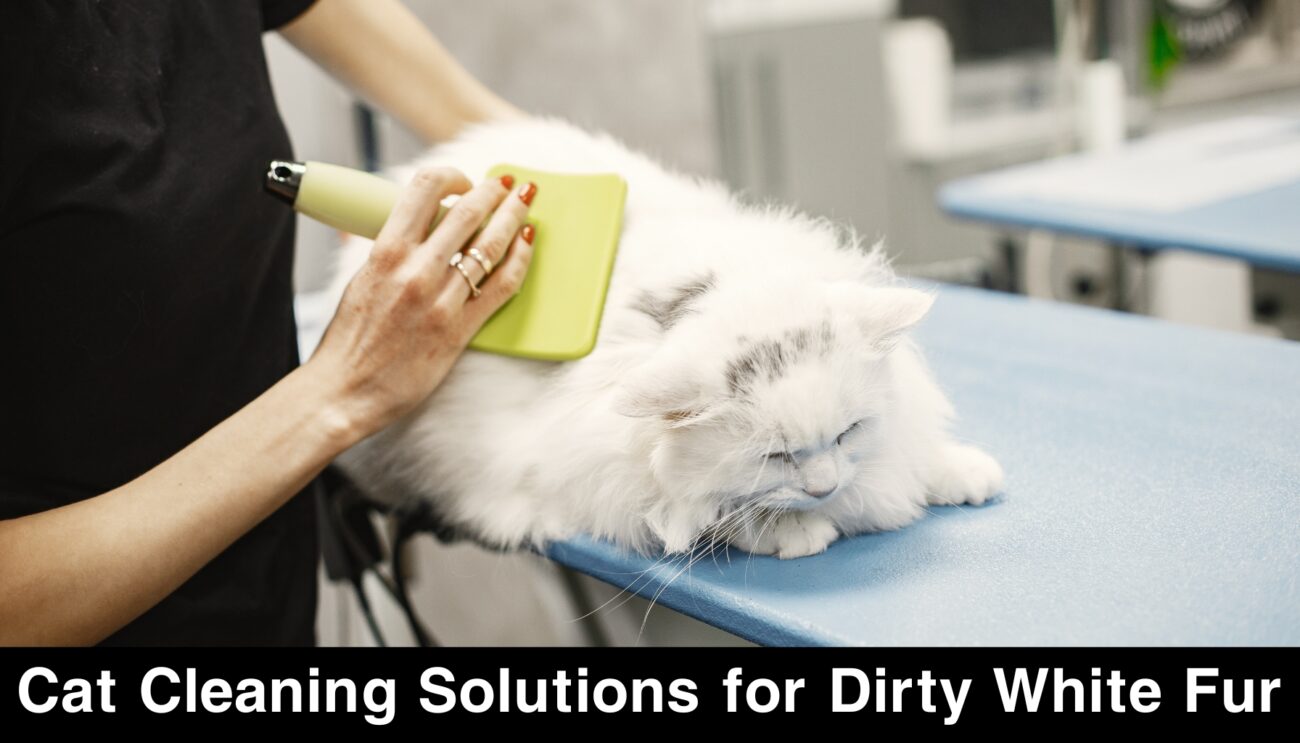
White cat fur can make even small amounts of dirt, food residue, litter dust, or discoloration easy to notice. If you have a dirty white cat, the first step is to identify what is causing the stain before deciding whether your cat needs brushing, spot cleaning, or a full bath.
If you’re wondering how to clean white cat fur, start with the gentlest method. Brush away loose debris, use a soft damp cloth or cat-safe grooming product for small stains, and reserve a full bath for fur that is genuinely dirty or soiled. Never use bleach, household cleaners, or human whitening products to make a white coat look brighter.
This guide explains how to remove stains from white cat fur, clean common problem areas, choose suitable grooming products, and prevent stains from returning.
Why Does White Cat Fur Look Dirty So Easily?
White fur does not necessarily become dirty faster than darker fur. Dirt and discoloration are simply easier to see against a white coat.
Several things can leave visible marks:
- Tear discharge around the eyes
- Wet food around the mouth and chin
- Urine around the hind legs or tail
- Litter dust on the paws and belly
- Mud and outdoor dirt
- Natural skin oils
- Poor self-grooming
- Mats that trap dirt and moisture
Long-haired cats may need additional grooming because their coats can trap more debris and develop tangles.
Regular brushing and checking problem areas can prevent minor dirt from developing into stubborn staining.
What Causes Stains on White Cat Fur?
Before cleaning the coat, identify the type of stain. Different causes require different approaches.
| Fur Problem | Common Area | Possible Cause | First Approach |
| Tear stains | Eyes and face | Eye discharge | Gentle eye-area cleaning |
| Food stains | Mouth, chin, chest | Food residue | Damp cloth or cat-safe wipe |
| Urine stains | Hind legs and tail | Urine contacting fur | Targeted cleaning |
| Litter stains | Paws and belly | Litter dust/debris | Brush or wipe |
| Mud/dirt | Paws and coat | Outdoor exposure | Spot clean or bathe if necessary |
| Greasy fur | Tail or body | Oil buildup or grooming difficulty | Brush and assess the cause |
Persistent staining accompanied by redness, hair loss, itching, odor, excessive discharge, or other changes should not be treated as only a cosmetic problem.
How to Remove Stains From White Cat Fur
If you’re searching for how to remove stains from white cat fur, avoid treating every stain the same way.
Small surface stains usually do not require a full bath. Start with gentle spot cleaning and only move to more extensive washing when necessary.

Removing Tear Stains
White cats can develop reddish or brown discoloration below the eyes when tears or eye discharge repeatedly wet the fur.
Use a soft, damp cloth or a cat-specific eye-area product to gently clean the stained area. Avoid rubbing the eye itself and do not use ordinary household stain removers.
If your cat has frequent or excessive tearing, swelling, redness, squinting, or unusual discharge, consult a veterinarian to identify the cause rather than repeatedly treating the stain.
Flat-faced cats, including Persians and Himalayans, may require more regular facial checks because of their facial structure.
Removing Food Stains
Wet food and oily food residue can collect around the mouth, chin, chest, and neck.
Gently wipe visible residue with a damp soft cloth after meals when necessary. Long-haired cats may require additional attention around the chin and chest because food can become trapped in longer fur.
Keeping feeding bowls clean also helps maintain everyday hygiene.
Cleaning Urine-Stained Fur
Urine staining is more noticeable on white fur and may occur around the hind legs, belly, or tail, particularly in long-haired cats.
Light staining may be managed through targeted cleaning with a suitable cat grooming product rather than bathing the entire body.
For cats with long coats, appropriate sanitary grooming may help prevent repeated soiling.
Recurring urine staining can also indicate that your cat is having difficulty using the litter box or keeping itself clean. If it happens repeatedly or is accompanied by changes in urination, seek veterinary advice.
Cleaning Litter and Paw Stains
Litter dust and debris can stick to paws and sometimes transfer to the belly or coat.
Wipe dirty paws with a damp cloth and maintain a clean litter area. Keeping the cat litter box clean and using suitable cat litter can reduce repeated contact with dirty or heavily soiled litter.
Cleaning Mud and Outdoor Dirt
Allow dry surface dirt to loosen before brushing it away.
If the dirt is wet or stuck to the coat, use a damp cloth for a small area. A larger contaminated area may require a proper bath with cat-safe shampoo.
Cleaning Greasy White Fur
Natural oils can sometimes make white fur appear yellow, dull, or greasy.
Regular brushing can distribute natural oils and remove loose debris. If the entire coat is unusually oily, a cat-safe shampoo may be appropriate.
Persistent greasiness, odor, skin changes, or difficulty self-grooming should be discussed with a veterinarian.
Spot Cleaning vs Full Bath: Which Does Your Cat Need?
A dirty white cat does not automatically need a full bath.
Choose the least intensive cleaning method that solves the problem.
| Situation | Spot Cleaning | Full Bath | Professional/Vet Help |
| Food around chin | ✓ | ||
| Mild tear staining | ✓ | If persistent | |
| Dirty paws | ✓ | ||
| Small urine stain | ✓ | If recurring | |
| Mud across most of coat | ✓ | ||
| Very greasy coat | Sometimes | ✓ | If persistent |
| Severe matting | ✓ | ||
| Skin redness or sores | ✓ | ||
| Strong unexplained odor | ✓ |
Spot cleaning reduces unnecessary washing and can be less stressful for many cats.
How to Clean a White Cat Step by Step
Learning how to clean a white cat does not mean creating a complicated bathing routine. Start by determining how much cleaning your cat actually needs.
Step 1: Inspect the Fur
Check the eyes, mouth, paws, belly, tail, and hindquarters.
Identify whether you’re dealing with loose dirt, food, litter, urine, oil, or another type of discoloration.
Step 2: Brush the Coat
Brush before introducing water whenever practical.
Brushing removes loose fur and surface debris while helping you identify tangles or mats.
Use a grooming tool suited to your cat’s coat. Purr Pet Food’s cat grooming accessories include products intended for regular coat care, while grooming brushes, combs, and gloves can be selected according to coat type.
Step 3: Spot Clean Small Areas
For minor dirt, use a soft damp cloth or suitable cat-safe grooming wipe.
Focus only on the affected area instead of wetting the entire coat.
Step 4: Bathe Only When Needed
If a large portion of the coat is dirty, use lukewarm water and a shampoo formulated for cats.
Keep water and shampoo away from the eyes, nose, and inside the ears unless the product is specifically intended for those areas.
Step 5: Rinse Thoroughly
Remove all shampoo from the coat.
Product residue can irritate the skin and make the fur feel sticky.
Step 6: Dry Gently
Use a soft or microfiber towel to absorb excess moisture.
Keep your cat in a comfortable, warm environment while the coat dries. If using any drying device, avoid excessive heat and stop if your cat becomes distressed.
Step 7: Check the Coat Again
Once dry, gently brush the coat where appropriate and check whether the original stain has been removed.
Do not repeatedly scrub stubborn discoloration. Some staining may take time to improve, while persistent discoloration may have an underlying cause.
How to Make Cat Fur White Again Safely
If you are wondering how to make cat fur white again, the goal should be to restore the coat’s natural appearance by removing dirt and staining not to chemically bleach or whiten the fur.
Never apply household bleach, laundry products, human hair-lightening products, harsh detergents, or unapproved whitening mixtures to your cat.
Instead:
- Identify what caused the discoloration.
- Brush away loose dirt.
- Spot clean mild stains.
- Use a cat-safe shampoo when a full wash is necessary.
- Rinse thoroughly.
- Dry and brush appropriately.
- Prevent the source of recurring stains.
Some discoloration will not disappear immediately, particularly when the fur has been repeatedly exposed to tears, urine, or other staining substances.
The priority should always be healthy skin and fur rather than making the coat artificially bright.
Best Tools for Cleaning White Cat Fur
Having suitable grooming tools makes routine cleaning easier.
Grooming Brush
Regular brushing removes loose hair, surface dirt, and debris.
Different coats need different brushes, so choose a cat grooming brush suitable for your cat’s fur length and density.
Grooming Comb
A cat grooming comb can help work through longer fur and identify small tangles before they develop into difficult mats.
Never pull aggressively at a mat.
Grooming Gloves
Grooming gloves can be useful for cats that tolerate hand-like grooming better than traditional brushes.
Cat-Safe Shampoo
When bathing is necessary, use cat shampoo formulated specifically for feline grooming rather than human shampoo or household cleaning products.
Medicated shampoos should be used according to product directions and veterinary advice where appropriate.
Soft Cloth and Microfiber Towel
A clean soft cloth is useful for small areas, while an absorbent towel helps remove water after bathing.
Nail Clippers
Appropriate cat nail clippers can be part of a broader grooming routine, although nail trimming and coat cleaning are separate tasks.
How to Clean White Persian Cat Fur
White Persian cats can require additional coat maintenance because their long fur can trap food, litter, urine, and other debris.
Their facial structure can also make visible tear staining a frequent grooming concern.
For routine care:
- Check around the eyes regularly.
- Gently clean visible facial residue.
- Brush the long coat consistently.
- Check the chin and chest after messy meals.
- Inspect the hindquarters for urine or litter contamination.
- Address tangles before they develop into severe mats.
- Keep bedding and litter areas clean.
Severe matting should not be pulled or cut close to the skin without appropriate experience. A professional groomer or veterinarian may be safer.
How Often Should You Clean a White Cat?
There is no single bathing schedule that applies to every white cat.
Cleaning frequency depends on:
- Coat length and density
- Indoor or outdoor lifestyle
- Age
- Self-grooming ability
- Health
- Amount and type of dirt
- Tendency to develop stains
Daily or As Needed
Check the eyes, mouth, paws, and hindquarters for visible residue.
Regular Brushing
Long-haired cats generally need more frequent brushing than short-haired cats because their coats tangle more easily.
Full Bath
Bathe when the coat is genuinely dirty, contaminated, or when bathing is recommended for a particular grooming or medical reason.
A white coat alone is not a reason to over-bathe a cat.
What Cleaning Products Are Safe for Cats?
Choose products according to their intended use rather than selecting them simply because they are described as “natural.”
Look for products that are:
- Specifically formulated for cats
- Appropriate for the body area being cleaned
- Clearly labeled with directions
- Easy to rinse when rinsing is required
- Suitable for eye-area use if being applied near the eyes
Purr Pet Food’s cat health and hygiene accessories can be used as a relevant starting point when looking for products intended for feline grooming and routine hygiene.
Products and Ingredients to Avoid
Do not use:
- Household bleach
- Laundry detergent
- Household surface cleaners
- Human hair-whitening products
- Harsh chemical stain removers
- Concentrated essential oils
- Tea tree oil products not specifically approved for feline use
Cats can lick substances from their coats during self-grooming, which makes product selection particularly important.
How to Keep White Cat Fur Clean Longer
Prevention can reduce the need for repeated bathing.
Keep the Litter Box Clean
Dirty litter can transfer urine, dust, and debris to the paws and coat.
Regular scooping and maintaining an appropriate litter box setup helps keep the surrounding environment cleaner.
Brush Regularly
Brushing removes surface debris before it becomes embedded in the coat.
It also makes it easier to notice changes in the skin or fur.
Clean Food Residue Early
Check the chin and chest after messy meals, particularly for long-haired cats.
Removing residue before it dries can make cleaning easier.
Keep Bedding Clean
Wash or replace dirty bedding so that a freshly groomed cat is not immediately exposed to the same dirt again.
Check the Eye Area
Cats prone to visible tear staining may benefit from regular gentle eye-area checks and cleaning.
Persistent excessive tearing needs veterinary attention.
Monitor the Hindquarters
Long-haired cats may need additional hygiene around the tail and back legs.
Repeated urine or fecal contamination should not simply be treated as a grooming issue if the cat is having difficulty staying clean.
When Dirty or Discolored Fur May Need Veterinary Attention
Not every coat problem can be solved with grooming.
Contact a veterinarian if dirty-looking or discolored fur occurs alongside:
- Persistent or excessive eye discharge
- Red or inflamed skin
- Hair loss
- Open sores
- Persistent itching
- Strong or unusual odor
- Repeated greasy patches
- Sudden coat changes
- Difficulty self-grooming
- Recurring urine staining
- Significant changes in behavior
The aim is to distinguish ordinary surface dirt from changes that could have an underlying health cause.
How Diet Relates to Skin and Coat Health
A nutritionally complete diet supports normal skin and coat health, but food should not be presented as the cause or solution for every coat problem.
Choose food appropriate for your cat’s life stage and nutritional requirements. Purr Pet Food’s cat food collection includes dry and wet options for kittens and adult cats.
If your cat develops sudden hair loss, excessive itching, skin irritation, or major coat changes, seek veterinary guidance rather than changing foods repeatedly without identifying the cause.
Stress-Free Grooming Tips
Cleaning is easier when your cat feels secure.
- Introduce grooming gradually.
- Keep sessions short.
- Use gentle movements.
- Choose a quiet environment.
- Avoid restraining the cat more than necessary.
- Reward calm behavior.
- Stop if your cat becomes highly distressed.
For cats that strongly resist bathing, spot cleaning may be preferable when only a small area is dirty.
Professional grooming may be appropriate when extensive cleaning or mat removal cannot be performed safely at home.
Common Mistakes When Cleaning White Cat Fur
Avoid these common mistakes:
- Bathing simply because the coat is white
- Using human shampoo without professional guidance
- Using bleach or household stain removers
- Scrubbing tear stains aggressively
- Ignoring recurring urine staining
- Bathing without brushing tangled long fur first
- Leaving shampoo residue in the coat
- Using excessive heat to dry fur
- Assuming every discoloration is only cosmetic
- Repeatedly washing greasy fur without investigating why it keeps returning
Gentle, targeted grooming is usually better than aggressive attempts to make white fur look perfectly bright.
Final Thoughts
Learning how to clean white cat fur starts with understanding why the coat looks dirty. Tear stains, food, urine, litter, mud, and natural oils all require slightly different approaches.
For a dirty white cat, use the least intensive method that works: brushing for loose debris, spot cleaning for small stains, and a cat-safe bath when the coat is genuinely soiled.
If you’re trying to understand how to make cat fur white again, focus on restoring its natural appearance rather than bleaching or aggressively whitening it. Regular grooming, clean bedding and litter areas, appropriate products, and early attention to recurring stains can help keep white fur cleaner while protecting your cat’s skin and comfort.