Grain-free cat food has raised questions about feline heart health, especially around dilated cardiomyopathy (DCM) and taurine. However, the relationship is not as simple as saying that grain-free food causes heart disease in cats.
Taurine deficiency is a well-established nutritional cause of DCM in cats. Modern concerns about grain-free diets, legumes, potatoes, and diet-associated DCM have been investigated much more extensively in dogs, while evidence in cats remains limited. The FDA’s investigation into diet-associated DCM centered primarily on dogs, although a small number of feline cases were also reported.
For cat owners, the more useful question is whether a food provides complete and balanced nutrition, adequate taurine, appropriate nutrients for the cat’s life stage, and a formulation suitable for the individual cat.
What Is Grain-Free Cat Food?
Grain-free cat food is formulated without common grains such as wheat, corn, rice, or barley.
Instead, some grain-free formulas may contain ingredients such as:
- Peas
- Lentils
- Chickpeas
- Potatoes
- Sweet potatoes
The term grain-free describes one characteristic of the recipe. It does not tell you whether the finished food is nutritionally complete or whether it is healthier than a grain-inclusive diet.
When comparing foods, consider the complete nutritional profile rather than judging a product by one ingredient or marketing claim.
You can explore different options in Purr Pet Food’s cat food collection.
Are Grains Bad for Cats?
Grains are not inherently harmful to most cats, and removing grains does not automatically make cat food healthier.
Cats are obligate carnivores and require nutrients that are naturally associated with animal-based nutrition, but that does not mean every plant ingredient or grain is automatically harmful.
A better way to evaluate food is to consider:
Complete Nutrition → Life Stage → Protein → Taurine → Essential Fats → Vitamins & Minerals → Calories → Individual Needs
The overall formulation matters more than whether the front of the package says “grain-free.”
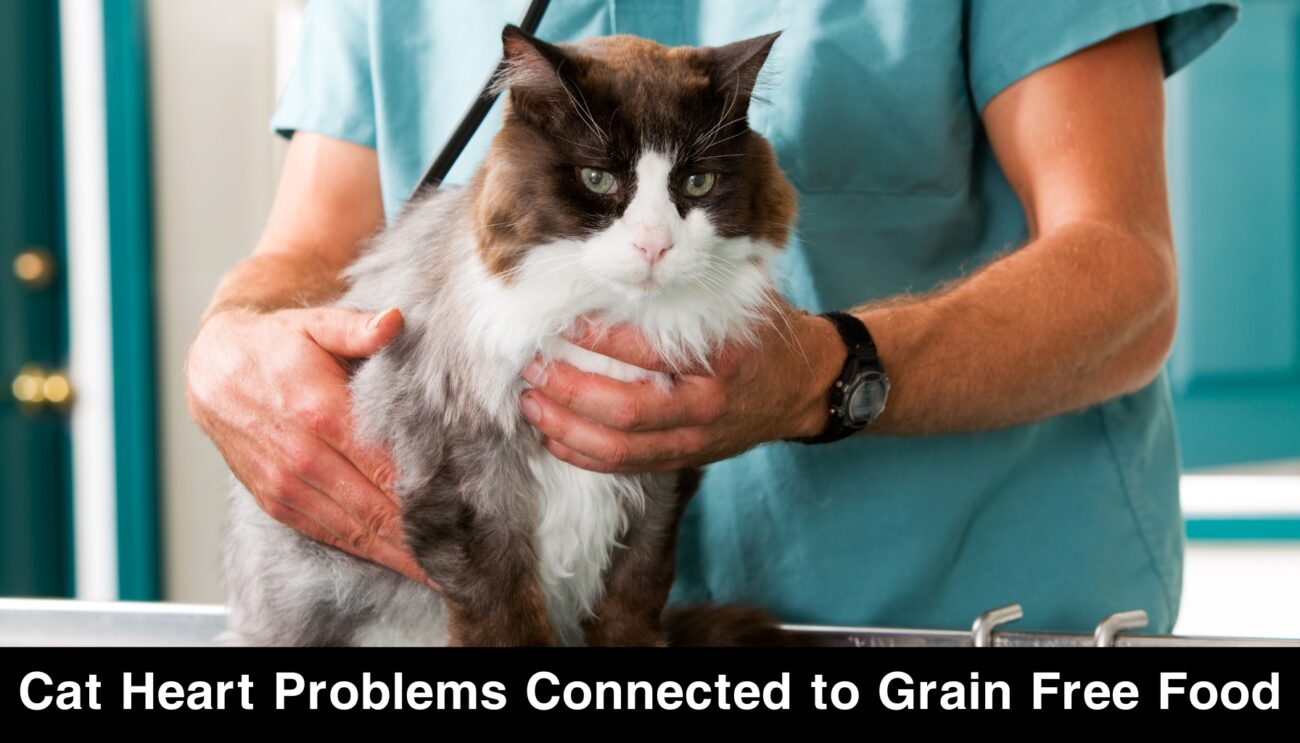
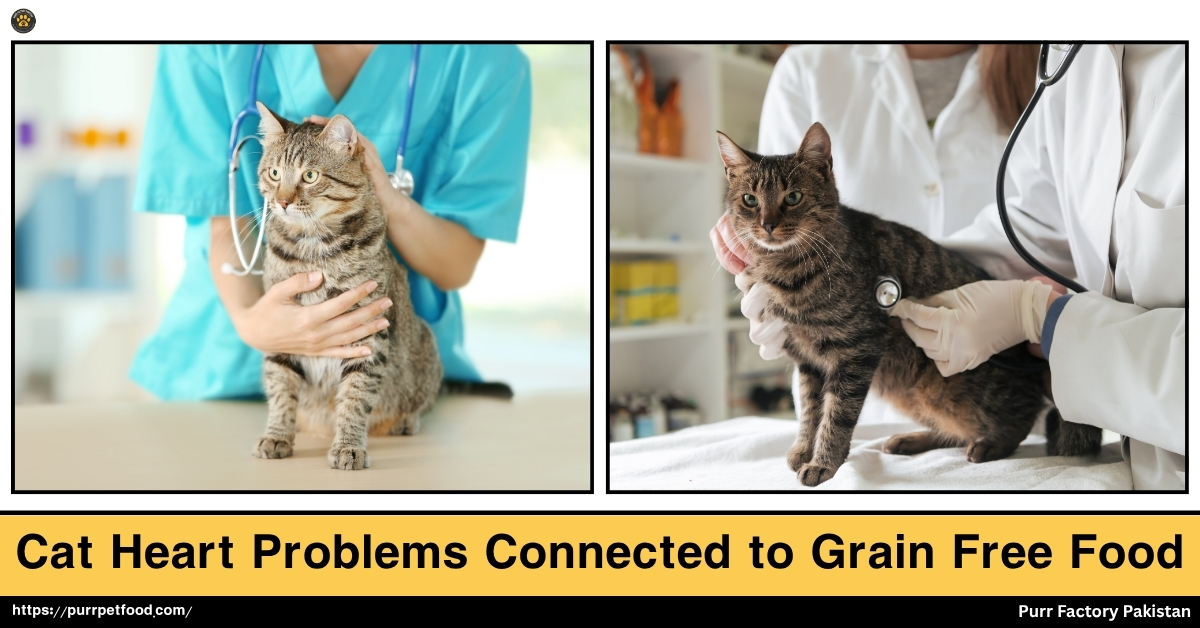
Cat Heart Problems Connected to Grain Free Food
Cardiomyopathy is a disease affecting the heart muscle. Cats can develop several forms of cardiomyopathy, and they should not all be treated as the same condition. Veterinary references classify feline cardiomyopathies into several types, including hypertrophic, dilated, and restrictive forms.
Hypertrophic Cardiomyopathy (HCM)
Hypertrophic cardiomyopathy involves abnormal thickening of the heart muscle.
It is different from DCM and should not be grouped into the grain-free diet discussion simply because both conditions affect the heart.
Dilated Cardiomyopathy (DCM)
Dilated cardiomyopathy involves reduced ability of the heart muscle to contract effectively. Historically, taurine deficiency was responsible for many feline DCM cases.
After the relationship between taurine deficiency and feline DCM was discovered, commercial cat foods were reformulated with adequate taurine, and taurine-responsive DCM became much less common.
Restrictive Cardiomyopathy (RCM)
Restrictive cardiomyopathy is another form of feline heart-muscle disease and has different characteristics from DCM.
The important point is that:
Not every heart problem in cats is caused by food, and not every cardiomyopathy is related to taurine or grain-free diets.
What Is DCM in Cats?
Dilated cardiomyopathy (DCM) is a heart-muscle disease in which the heart loses some of its ability to contract effectively.
As heart function declines, it becomes more difficult for the heart to pump blood efficiently.
DCM was historically a significant problem in cats until researchers established the importance of taurine in feline nutrition. Taurine-responsive DCM subsequently became much less common after adequate taurine was incorporated into commercial cat foods.
This relationship is important:
Taurine Deficiency → Impaired Heart Function → Taurine-Responsive DCM
It is much better established than:
Grain-Free Food → DCM
Why Is Taurine Important for a Cat’s Heart?
Taurine is an essential amino acid-like nutrient for cats and plays important roles in normal heart and eye function.
Cats cannot rely on producing enough taurine themselves, so adequate amounts must come from their diet.
A nutritionally inadequate diet can therefore create serious problems.
Historically, taurine deficiency was responsible for many cases of feline DCM. Today, taurine-responsive DCM is uncommon in cats eating appropriately formulated commercial cat food, but nutritional cases can still occur, particularly with poorly formulated or nutritionally inadequate diets.
This is why cat owners should evaluate the nutritional adequacy of the finished food, rather than focusing exclusively on whether it contains grains.
What Does Research Say About Grain-Free Cat Food and DCM?
The evidence needs to be separated into what is established and what remains uncertain.
What We Know
Taurine deficiency can cause DCM in cats. This relationship has been recognized for decades.
Commercial cat-food formulation changed substantially after this relationship was identified.
What Raised Concern About Grain-Free Diets?
The FDA investigated reports of DCM in animals consuming diets that frequently contained peas, lentils, other pulses, or potatoes and were often marketed as grain-free.
However, the investigation was overwhelmingly focused on dogs. The FDA’s technical work included only a very small number of cats compared with dogs, so canine findings should not automatically be generalized to the feline population.
The FDA also found that average protein, fat, taurine, cystine, and methionine levels were similar in the grain-free and grain-containing foods it tested during one stage of its investigation.
What We Still Don’t Know
Questions remain about the possible roles of:
- Overall diet formulation
- Ingredient combinations
- Dietary fiber
- Amino-acid availability
- Taurine metabolism
- Processing
- Individual animal differences
Therefore, it would be inaccurate to conclude that every grain-free food causes DCM or that simply adding grains makes a diet heart-healthy.
| Question | Evidence Context |
| Can taurine deficiency contribute to DCM in cats? | Yes — established relationship |
| Is every grain-free food unhealthy? | No |
| Does grain-free food automatically cause feline DCM? | Not established |
| Are peas or lentils proven to cause DCM in cats? | Not established |
| Does overall diet formulation matter? | Yes |
| Is nutritional adequacy important? | Yes |
Are Peas, Lentils and Potatoes Bad for Cats?
Peas, lentils, chickpeas, and potatoes are found in some grain-free pet foods, but their presence alone does not establish that a diet is harmful.
These ingredients attracted attention because they appeared frequently in some diets reported during the diet-associated DCM investigation, particularly in dogs. Researchers investigated whether formulation, ingredient combinations, fiber, amino-acid metabolism, or other factors could be involved.
The better question is not:
“Does this food contain peas?”
It is:
“Is the finished food nutritionally complete, appropriately formulated, and suitable for my cat?”
Do Novel Proteins Increase Heart Risk?
Novel or less-common proteins such as duck are not automatically harmful to a cat’s heart.
A protein source should not be judged simply because it is less common than chicken or beef.
What matters is whether the complete diet supplies adequate:
- Protein
- Taurine
- Essential amino acids
- Fat
- Vitamins
- Minerals
- Calories
The FDA’s investigation also found no single animal-protein source predominated among reported diet-associated DCM cases.
Grain-Free vs Grain-Inclusive Cat Food
Neither category is automatically healthier.
| Factor | Grain-Free Food | Grain-Inclusive Food |
| Contains grains | No | Usually yes |
| May contain legumes or potatoes | Often | Varies |
| Can provide complete nutrition | Yes | Yes |
| Automatically healthier | No | No |
| Appropriate for every cat | No | No |
| Overall formulation matters | Yes | Yes |
Instead of choosing food solely because it is grain-free or grain-inclusive, evaluate whether it provides complete nutrition for your cat.
What Should You Look for in a Complete Cat Food?
A good cat food should be selected according to nutritional quality and suitability rather than marketing terminology.
Look for:
Complete and Balanced Nutrition
The food should be formulated to meet the nutritional requirements of its intended life stage.
Appropriate Life Stage
Kittens, adult cats, and seniors can have different nutritional requirements.
Adequate Taurine
Because cats depend on dietary taurine, it is an important part of a properly formulated feline diet.
Appropriate Protein
Cats require sufficient dietary protein and essential amino acids.
Essential Fats, Vitamins and Minerals
Protein alone does not make a complete diet.
Appropriate Calories
Energy intake should match your cat’s size, age, activity level, and body condition.
For a broader guide to choosing healthy cat food, compare nutritional adequacy, life stage, protein, taurine, moisture, and calories rather than focusing on a single ingredient.
Does Wet or Dry Food Matter for Heart Health?
Wet and dry cat foods can both provide complete and balanced nutrition when appropriately formulated.
Wet Cat Food
Wet cat food generally contains substantially more moisture and may help increase total dietary water intake.
Dry Cat Food
Dry cat food is convenient, easy to portion, and can also provide complete nutrition.
Neither format should be described as preventing heart disease simply because it is wet or dry.
For heart health, the more important considerations are the overall nutritional formulation, adequate taurine, appropriate calories, and the individual cat’s health needs.
What Are the Signs of Heart Problems in Cats?
Heart disease can sometimes be difficult for owners to recognize, and cats may hide illness until a condition becomes more advanced.
Possible warning signs can include:
- Rapid breathing
- Difficult or labored breathing
- Reduced activity
- Weakness
- Collapse
- Poor appetite
- Exercise intolerance
- Sudden weakness or inability to use the hind legs
Cats with DCM can develop severe respiratory problems due to fluid accumulation in or around the lungs, and symptoms may progress rapidly.
These symptoms require veterinary evaluation rather than diagnosis through diet alone.
When Should You Contact a Veterinarian?
Difficulty breathing, collapse, severe weakness, or sudden inability to use the hind legs can be medical emergencies. Seek veterinary care immediately.
Do not attempt to treat suspected heart disease simply by switching foods or adding taurine supplements.
A veterinarian may recommend appropriate examinations and diagnostic testing based on the cat’s symptoms and medical history.
Should I Stop Feeding My Cat Grain-Free Food?
Do not suddenly change your cat’s diet simply because the package says grain-free.
Instead, check whether the food:
- Is complete and balanced
- Is formulated specifically for cats
- Is appropriate for your cat’s life stage
- Provides adequate taurine and other essential nutrients
- Comes from a manufacturer with clear nutritional information
- Is suitable for your individual cat
If your cat has diagnosed heart disease, concerning symptoms, or you are worried about its current diet, discuss the food with your veterinarian before making major changes.
How to Choose Cat Food With Heart Health in Mind
Use this simple checklist:
1. Is the food complete and balanced?
Nutritional adequacy matters more than marketing terms.
2. Is it appropriate for your cat’s life stage?
Kitten and adult nutritional requirements are not identical.
3. Does the diet provide adequate taurine?
Taurine has an established relationship with feline heart health.
4. Is the manufacturer transparent about the food?
Look for clear nutritional and feeding information.
5. Does the food suit your individual cat?
Age, body condition, activity level, medical history, and tolerance all matter.
6. Are you choosing based on nutrition or marketing?
Terms such as “grain-free,” “premium,” and “natural” should not replace evaluation of the complete diet.
For more options, browse Purr Pet Food’s main cat food collection.
Don’t Choose Cat Food Based on Marketing Terms Alone
Pet-food packaging often emphasizes phrases such as:
- Grain-free
- Premium
- Natural
- High protein
- Limited ingredient
These terms may describe certain characteristics of the food, but they do not automatically establish nutritional quality.
For example:
Grain-Free ≠ Automatically Healthier
High Protein ≠ Automatically Complete
Premium ≠ Nutritional Standard
A better approach is:
Complete Nutrition → Life Stage → Taurine → Protein → Calories → Individual Needs
Final Thoughts
The relationship between grain-free cat food and heart problems is more complex than the claim that removing grains causes DCM.
The strongest established nutritional relationship in cats is:
Taurine Deficiency → Feline DCM
Modern concerns about:
Grain-Free Diets → Legumes/Pulses → Diet-Associated DCM
have been investigated much more extensively in dogs, and the evidence should not be generalized to cats without appropriate qualification.
For cat owners, the practical focus should remain on complete and balanced nutrition, adequate taurine, appropriate life-stage feeding, body condition, manufacturer transparency, and individual health needs.
If your cat shows difficulty breathing, collapse, severe weakness, or sudden hind-leg problems, treat it as a veterinary concern not simply a food-selection problem.