- For Ordering Whatsap/Call: +92 3343466336 , Our Delivery Service operates 7-days a week. Place order now!

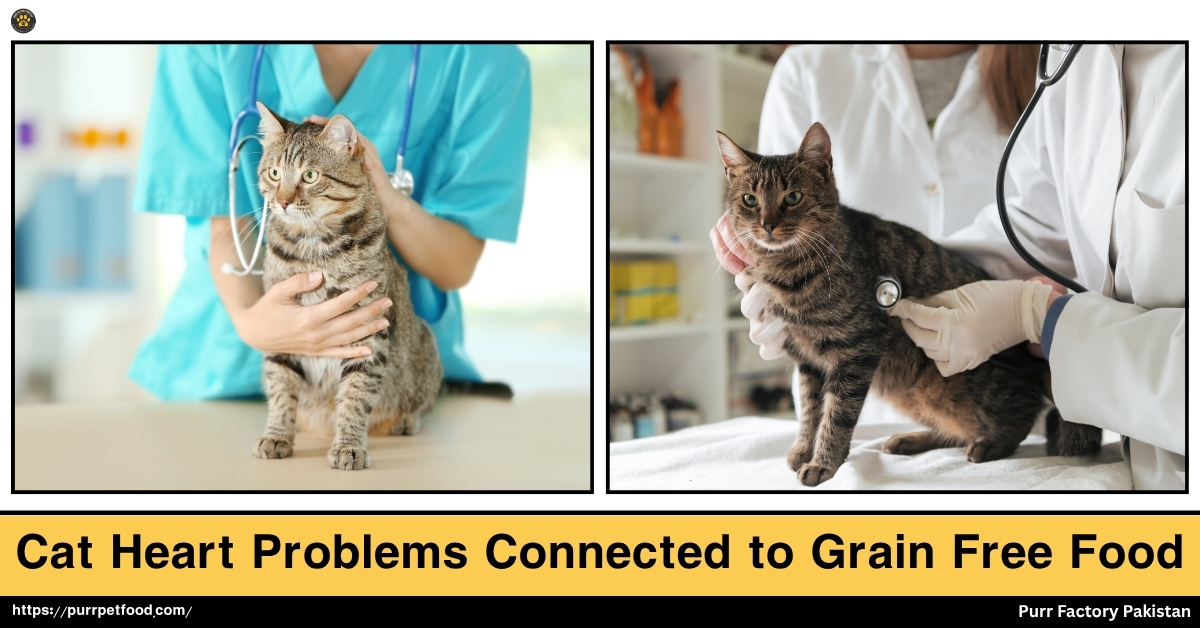
Cat Heart Problems Connected to Grain Free Food
Cat owners often turn to grain-free food believing it’s a healthier, more natural choice but recent studies are raising serious concerns.
Veterinarians and researchers have started to see a possible connection between grain-free diets and heart problems, particularly a condition known as Dilated Cardiomyopathy (DCM).
While once rare in cats, DCM cases have resurfaced, often linked to diets heavy in peas, lentils, or potatoes common grain replacements.
The question isn’t just about removing grains; it’s about whether these diets compromise essential nutrients like taurine, which cats need for proper heart function.
Understanding what’s behind this connection is crucial for keeping your cat healthy and safe.
Cat Heart Problems Connected to Grain Free Food
In this guide, we will explain how grain-free diets may contribute to heart problems in cats, what the research says, and what you should do to protect your pet.
DCM in Cats
Dilated Cardiomyopathy (DCM) is a serious heart disease where the heart muscles weaken and the chambers enlarge, making it difficult for the heart to pump blood effectively.
In cats, this condition was once common before scientists discovered that taurine deficiency was the main cause.
Taurine is an essential amino acid that cats cannot produce on their own it must come from their diet. When taurine levels drop, the heart muscle loses its strength, leading to DCM.
After Pet Food companies began adding taurine to commercial cat foods, DCM cases declined sharply.
However, in recent years, veterinarians have noticed a rise in DCM cases again, particularly among cats on grain-free diets.
The concern is that even if taurine is present in these diets, certain ingredients may interfere with how well cats absorb or use it.
This makes DCM not just a medical issue, but a nutritional one that owners need to take seriously.
Grain-Free Diets
Grain-free cat food removes traditional grains such as corn, wheat, rice, or barley, and replaces them with alternatives like peas, lentils, chickpeas, potatoes, or sweet potatoes.
These diets became popular due to marketing claims that grains cause allergies or are “fillers” with little nutritional value.
However, true grain allergies in cats are rare, and grains can actually provide valuable nutrients and energy when properly balanced.
The problem with grain-free food lies not in what’s missing, but in what’s added to replace it. High amounts of legumes or starchy vegetables change the nutritional balance of the diet.
These ingredients may reduce the availability of key nutrients like taurine or other amino acids that are critical for heart health.
While grain-free diets may sound premium or natural, they don’t always meet the unique dietary needs of cats who are obligate carnivores and thrive on meat-based protein.
Link Between Grain-Free Food and Heart Problems
Over the past decade, veterinary reports have linked an increasing number of pet heart disease cases to grain-free or “boutique” diets.
Most of this research has focused on dogs, but cats have not been left out of the picture. Cats fed grain-free diets for extended periods have shown signs of weakened heart walls and early heart dysfunction.
While not every grain-free food causes this, the trend raises red flags. The concern is that diets high in legumes or potatoes may alter how cats digest and absorb vital nutrients, especially taurine.
Taurine is critical for normal heart muscle function, and even a small disruption in how it’s processed can lead to deficiency-like effects.
Another factor is that some grain-free diets use unusual protein sources like duck, kangaroo, or fish blends, which may not have the same amino acid balance as traditional meat-based diets.
Combined, these factors can contribute to the weakening of the heart over time, even when lab values appear normal.
Why Grain-Free Food May Increase Heart Risk
The main reason grain-free diets may increase heart risk in cats is nutritional imbalance. Cats require high levels of animal protein and specific amino acids to maintain heart health.
Grain-free formulas often substitute a portion of meat with plant-based ingredients, which lowers overall amino acid availability.
High-fiber content from peas and lentils may also bind certain nutrients, reducing their absorption. In some cases, these diets might meet basic nutritional standards on paper but fail to deliver nutrients in a form cats can effectively use.
Another issue is bioavailability how well a cat’s body can actually utilize nutrients once eaten.
When essential nutrients like taurine or carnitine are not properly absorbed or metabolized, the heart muscle weakens gradually. Over time, this can develop into DCM even without visible symptoms.
The lesson is clear: the quality and digestibility of ingredients matter far more than trendy claims about being “grain-free.”
What This Means for Cat Owners and Pet Brands
For cat owners, this information should shift focus from marketing terms to actual nutritional science. “Grain-free” is not automatically better and in many cases, it may pose unnecessary risks.
If your cat is currently on a grain-free diet, review the ingredients carefully. Look for meat or animal protein as the first ingredient and minimize formulas that rely heavily on peas, lentils, or potatoes.
Consult your veterinarian about taurine levels and ask whether a switch to a balanced, grain-inclusive diet might be beneficial.
Regular checkups, especially for older cats, can detect early signs of heart issues before they become severe.
For pet brands, this is an opportunity to educate rather than just sell. Transparency about ingredient sourcing, nutrient testing, and taurine supplementation builds trust with consumers.
Brands that base their formulations on scientific evidence and veterinary nutrition standards will stand out from those following trends.
Instead of promoting “grain-free,” focus marketing on “nutritionally complete,” “vet-approved,” or “taurine-optimized” diets. This helps both the business and the cats stay healthier in the long run.
Areas That Need More Research
Despite growing awareness, much remains unclear about how grain-free diets affect feline heart health.
Most studies to date are small and short-term, leaving gaps in understanding the long-term consequences.
More research is needed to confirm whether specific ingredients like peas or lentils directly cause heart issues or whether other factors such as overall diet formulation or processing methods play a larger role.
Scientists also need to study how nutrient absorption and metabolism differ between various grain-free formulations.
Another research priority is determining how much taurine cats truly need when their diets include non-traditional ingredients.
Understanding how these components interact could help develop safer recipes in the future.
For now, the safest approach is caution. Until larger studies confirm which diets are risk-free, it’s best for cat owners to choose well-balanced, meat-based foods with proven nutritional profiles.
Veterinary guidance remains the best defense against diet-related health risks.
Conclusion
Grain-free cat food may appear to be a healthier choice, but evidence suggests it could carry hidden risks for your cat’s heart.
The issue isn’t the absence of grains it’s the imbalance created when grains are replaced with high levels of legumes, potatoes, or other fillers that may interfere with essential nutrients like taurine.
Over time, this can weaken the heart and lead to conditions such as Dilated Cardiomyopathy (DCM).
Cat owners should prioritize complete, balanced diets based on high-quality animal protein rather than marketing claims.
Always consult a veterinarian before making dietary changes, and keep an eye on your cat’s long-term health through regular checkups.
In short, balanced nutrition not grain-free labels is what truly keeps your cat’s heart strong and healthy.