
Cat Cleaning Solutions for Dirty White Fur
Cat Cleaning is an essential part of keeping your feline healthy, happy, and comfortable especially if you have a white cat.
White fur gets dirty quickly, showing even the smallest stains, dust, or discoloration.
Whether it’s food spills on the chin, muddy paw prints, tear stains around the eyes, or yellow patches from urine, white cats require more frequent cleaning than darker-coated cats.
Without proper care, dirt and oil buildup can lead to tangles, skin irritation, bad odors, and even infections.
Many cat owners struggle because they either over-bathe their cats or use the wrong products, which can harm the skin and coat.
A consistent cleaning routine helps prevent these issues while keeping your cat looking fresh and healthy.
This process isn’t just about appearance it directly impacts your cat’s hygiene, comfort, and overall well-being.
Cat Cleaning Solutions for Dirty White Fur
In this guide, we will explain step-by-step cat cleaning solutions, tools, and techniques to safely and effectively clean dirty white fur, while reducing stress for both you and your cat.
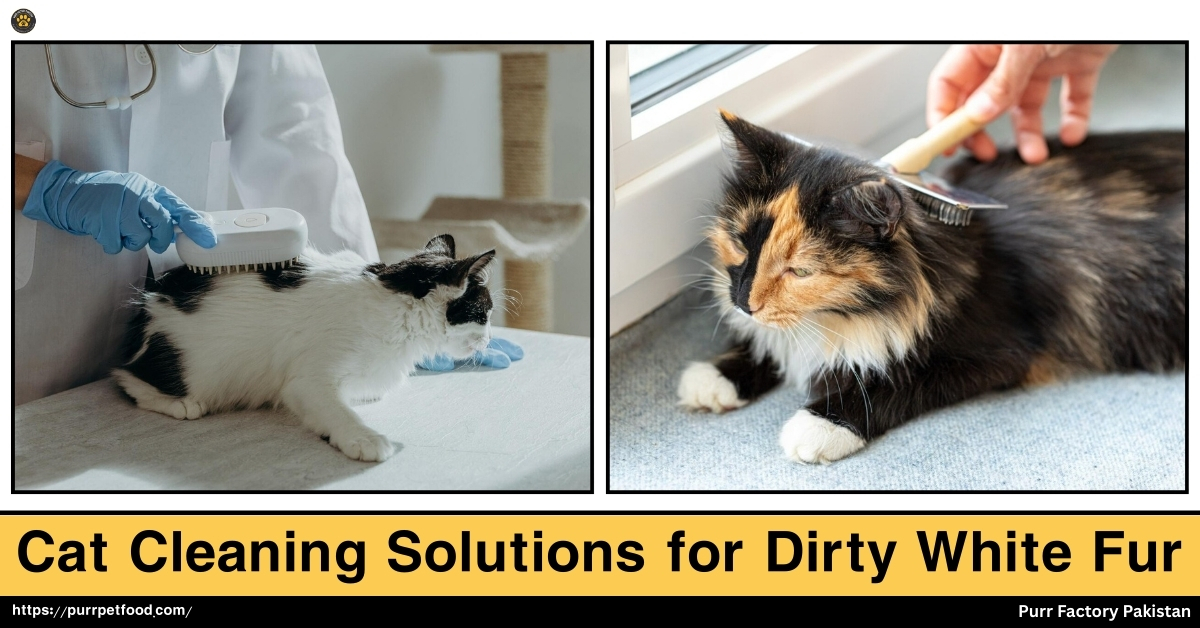
1. Why White Cat Fur Gets Dirty Fast
White cat fur gets dirty faster because it highlights every bit of dust, dirt, and oil. Even a small speck of mud or food stain becomes highly visible.
Cats with white coats often struggle with stains from several sources.
Tear stains are a common issue, especially for flat-faced breeds like Persians and Himalayans, where watery eyes leave reddish-brown marks around the eyes and nose.
Food stains are another problem; wet food or oily treats can easily leave yellowish patches on the chin, neck, and around the mouth.
Outdoor cats face more dirt exposure from mud, grass, and pollution. Indoor cats are not completely safe either, as litter dust, urine stains, and household dust can settle on their coat.
Natural body oils also collect on white fur, especially near the tail and belly, making the fur appear greasy.
Additionally, cats with health issues like allergies or fungal infections may develop patches of discoloration or excessive oil buildup.
White fur acts like a blank surface, showing these problems more clearly, which is why regular cleaning is essential to maintain hygiene and appearance.
2. Building a Cat Cleaning Routine
Maintaining a white cat’s fur requires a structured cat cleaning routine. A clear schedule helps prevent dirt buildup and makes cleaning easier over time. The routine should include daily, weekly, and monthly tasks.
Daily Routine:
Each day, check your cat’s face, especially around the eyes and mouth. Wipe away tear stains or food residue using a soft, damp cloth or cat-safe wipes.
Quickly brush the coat to remove surface dust and prevent tangles. Inspect the paws for litter or mud, especially if your cat goes outdoors.
Weekly Routine:
Once a week, dedicate extra time to grooming. Brush the entire body to remove loose fur and prevent mats.
Use dry shampoo or spot-cleaning wipes for areas that need extra attention. Clean the ears with a vet-approved ear cleaner and cotton pad, and check for signs of redness or bad odor.
Monthly Routine:
Give your cat a full bath every four to six weeks, depending on how quickly the fur gets dirty. Trim the nails before bathing to avoid scratches.
Also, trim the fur around the back legs and tail to prevent urine stains.
3. Essential Cat Cleaning Tools
Having the right tools makes cat cleaning much easier and safer. Invest in a few essential grooming items instead of using Random Household Products.
A soft brush or comb is necessary for daily grooming. Slicker brushes work well for long-haired cats, while wide-tooth combs are ideal for detangling.
Cat-safe grooming wipes are great for quick cleanups, especially for eye stains and food residue. Mild cat shampoo is important for monthly baths, as human shampoos can irritate a cat’s skin.
For tear stains, a tear stain remover solution or wipes specifically designed for cats will help manage discoloration around the eyes.
A microfiber towel is best for drying the fur because it absorbs water quickly without rubbing too hard. If your cat has long hair, a pet-safe blow dryer on low heat can speed up drying time.
Finally, cat nail clippers are essential to keep the claws trimmed, making grooming sessions safer for you and your cat.
Using the right tools not only keeps the cleaning process efficient but also prevents accidental harm to your cat’s skin and coat.
4. Step-by-Step Cleaning Process for White Fur
Cat cleaning white fur requires patience and the correct steps to avoid stress and skin irritation.
Step 1: Preparation
Before starting, gather all tools and place them within reach. Trim your cat’s nails to reduce scratching risk. Choose a quiet, warm area where your cat feels comfortable, such as a bathroom or laundry room.
Step 2: Brushing
Always brush the cat’s coat before bathing. This removes loose dirt, hair, and tangles. Brushing also makes washing easier and prevents mats from tightening when wet.
Step 3: Spot Cleaning
If certain areas like the face, paws, or chin are extra dirty, clean them with cat-safe wipes or a damp cloth before giving a full bath. This reduces overall washing time.
Step 4: Bathing
Fill a sink or tub with lukewarm water. Slowly wet the cat’s fur, starting from the back and avoiding the face.
Apply a small amount of cat shampoo, massaging it into the fur gently. Focus on visibly stained areas, like paws or tail.
Step 5: Rinsing
Rinse thoroughly until no shampoo remains. Soap residue can cause irritation and itching, so ensure all suds are completely removed.
Step 6: Drying
Wrap your cat in a towel to soak up excess water. Use a blow dryer on low heat if your cat tolerates it. Make sure the cat is completely dry before allowing it to roam freely, as damp fur can attract dirt quickly.
5. Common Stain Problems and Solutions
White cats are prone to different types of stains, and each requires a specific solution.
Tear Stains:
Caused by watery eyes, these appear as brown or reddish streaks near the eyes and nose. Wipe daily with tear stain wipes and keep the area dry. Consult a vet if the tearing is excessive.
Food Stains:
Food, especially wet meals, can stain the chin and neck area. Wipe your cat’s face after every meal using a soft cloth or wipe.
Paw Stains:
Mud, litter dust, and outdoor dirt collect on the paws. Clean paws daily, especially during rainy weather or if your cat goes outdoors.
Urine Stains:
Long fur near the genitals can trap urine, leading to yellow stains and bad odors. Trim the fur in this area and clean with a mild shampoo as needed.
Greasy Fur:
Some cats produce excess oil, which causes dullness and sticky patches. A degreasing cat shampoo once a month can control this issue.
Addressing each stain type regularly prevents long-term discoloration and keeps the fur healthy.
6. Safe Ingredients to Look for in Cat Cleaning Products
Not all grooming products are safe for cats. The wrong ingredients can harm their skin or cause allergic reactions. Always check labels for safe components.
Good ingredients include aloe vera, which soothes irritated skin, and coconut oil, which moisturizes naturally.
Oatmeal extract is another gentle option that relieves itching and dryness. Chamomile offers natural calming and anti-inflammatory properties.
Avoid harmful ingredients such as alcohol, bleach, and tea tree oil, as they are toxic to cats. Strong artificial fragrances should also be avoided, as they can irritate sensitive skin and respiratory systems.
Using safe, natural ingredients ensures that your cleaning routine supports your cat’s overall health and comfort.
7. When to Seek Professional Grooming
Sometimes, at-home cat cleaning isn’t enough, and professional grooming becomes necessary. Take your cat to a groomer or veterinarian if the fur is extremely matted and tangled, making brushing impossible.
Persistent bad odors that do not go away even after bathing can indicate hidden skin problems or infections. If you notice signs like redness, sores, or unusual scratching, a vet check-up is essential.
Professional groomers have the tools and experience to handle deep cleaning safely. They can also trim the coat evenly, which reduces future staining problems.
Cats with behavioral issues that make home grooming stressful may also benefit from professional services, where trained handlers can manage them calmly and safely.
8. Tips for Reducing Fur Stains Long-Term
The best way to manage dirty white fur is to prevent staining in the first place. A clean environment plays a huge role in keeping your cat’s coat spotless.
Make sure your home, especially areas where your cat sleeps or eats, is free from dust and debris. Litter boxes should be scooped daily to prevent urine or litter dust from clinging to your cat’s fur.
Using low-dust, clumping litter also reduces paw staining. Trimming the fur around the tail and hind legs is a practical step for long-haired cats, as it prevents urine and waste from sticking to the coat.
Diet also directly affects coat cleanliness and health. Feeding your cat high-quality food with essential nutrients like omega-3 fatty acids and proteins helps maintain strong, shiny fur that is less prone to oil buildup and staining.
Avoid cheap foods with fillers or artificial colors, as they can cause excess shedding, dull fur, and even digestive issues that lead to messy accidents.
Along with diet, regular brushing prevents dirt from settling on the fur and spreads natural oils evenly, keeping the coat looking fresh.
Tear stains are a common challenge for white cats, especially flat-faced breeds. Wiping the eye area at least twice a day with a damp cloth or vet-approved wipe can significantly reduce staining.
If tear production is excessive, consult a veterinarian to rule out infections or allergies. Finally, limit your cat’s outdoor access if possible.
Outdoor cats naturally pick up more dirt, pollen, and pollutants, making cleaning more frequent and difficult.
By maintaining a clean home, feeding a balanced diet, and staying consistent with grooming habits, you can reduce the occurrence of fur stains and keep your white cat’s coat bright and healthy for the long term.
9. Stress-Free Cleaning for Cats
Cats can become anxious during grooming sessions. Reducing stress makes the process easier for both you and your pet.
Start by introducing cat cleaning activities gradually, especially when your cat is young. Use calm, gentle movements and a quiet voice. Reward good behavior with treats and praise. Keep sessions short to avoid overwhelming your cat.
If your cat is fearful of water, start with spot cleaning before attempting a full bath. Providing a warm, non-slippery surface during bathing helps the cat feel secure.
Creating a positive association with grooming over time ensures a smoother experience and better cooperation from your cat.
10. How Often White Cats Need Cleaning
The frequency of cleaning a white cat depends on several factors, including their environment, coat type, and activity level. Indoor cats that stay mostly inside a clean home need less frequent full baths but still require daily and weekly maintenance.
Wiping your cat’s face and paws each day is essential, as this prevents tear stains, food residue, and litter dust from building up.
A light daily brushing is also recommended for long-haired breeds to prevent tangles and mats. Even short-haired white cats benefit from a quick brush several times a week to remove loose fur and distribute natural oils.
For a deeper clean, a full bath should be given roughly every four to six weeks. This schedule helps remove accumulated dirt, oil, and stains while keeping the coat healthy.
Outdoor cats, or those exposed to dusty or polluted environments, may need more frequent baths, around every two to three weeks, to manage their higher exposure to dirt.
Professional grooming is generally required every three to four months, especially for cats with thick or long coats.
During these visits, groomers can trim hair, treat stubborn stains, and address mats that are difficult to manage at home.
Regular nail trimming and ear cleaning should be part of the monthly care routine.
Consistency is key skipping cat cleaning sessions allows dirt and oils to build up, making future grooming sessions more difficult and stressful for both you and your cat.
By following a predictable schedule, you create a balanced routine that keeps your white cat’s fur bright and hygienic without over-washing.
11. Mistakes to Avoid When Cleaning White Fur
When cleaning white cat fur, many owners make mistakes that can cause more harm than good. One of the most common errors is using human shampoo or household cleaning products.
These are not made for a cat’s sensitive skin and can cause dryness, irritation, or allergic reactions.
Cat skin has a different pH balance, and harsh chemicals disrupt this balance, leading to issues like dandruff and itching.
Always use shampoos and cleaners specifically formulated for cats to keep their skin and coat healthy.
Another major mistake is skipping the brushing step before giving your cat a bath.
When tangled fur gets wet, the knots become tighter and harder to remove, which causes discomfort and can even lead to skin infections under the mats.
Taking a few minutes to brush your cat thoroughly before bathing prevents this problem and makes the entire cleaning process smoother.
Similarly, failing to rinse shampoo properly is a big issue. Any leftover soap residue can irritate the skin and attract more dirt, making your white cat’s fur look dull soon after cat cleaning.
Over-bathing is also a problem that many owners don’t realize. Bathing too frequently strips away natural oils, leaving the skin dry and sensitive.
For most white cats, a full bath once every four to six weeks is enough unless they have a specific health condition that requires more frequent washing.
Lastly, rushing through the process creates stress for your cat. Cats are highly sensitive to your mood, and if you appear hurried or frustrated, they will become anxious and uncooperative.
Take your time and approach grooming with patience. Avoiding these mistakes will help you maintain a healthy, clean coat while keeping the experience positive for your cat.
Conclusion
Keeping a white cat’s fur clean is not just about appearance; it’s about maintaining their overall health and comfort.
White fur naturally shows dirt, stains, and discoloration more than other coat colors, which means a consistent cleaning routine is essential.
By following proper grooming practices including daily wiping, weekly brushing, and monthly bathing you can prevent buildup of dirt, oils, and stains that lead to skin problems and discomfort.
Using safe, cat-specific products is equally important to avoid irritation and protect the natural balance of your cat’s skin and coat.
A clean environment, a balanced diet, and preventive care play a major role in reducing how often deep cleaning is needed.
Tear stains, food residue, and litter-related marks can be managed through simple daily habits that take just a few minutes.
Grooming also builds trust between you and your cat when done patiently and gently.
In the long run, these small, consistent efforts make grooming easier, keep your cat healthier, and allow them to feel more comfortable and confident.
With the right approach, maintaining a bright, spotless coat for your white cat becomes a natural part of everyday pet care, ensuring they always look and feel their best.