
Cat Food Recommended for Allergy and Itch Skin Relief
Cat Food plays a direct role in how your cat feels, behaves, and responds to everyday irritants. When a cat starts scratching nonstop, losing fur, licking its paws, or developing patches of irritated skin, the problem often traces back to what’s inside the food bowl.
Food allergies and sensitivities are far more common than most owners realize, and research shows that a significant percentage of chronic itching in cats is triggered by specific proteins found in regular commercial diets.
Cats cannot communicate discomfort, so their bodies react through skin inflammation, digestive issues, and persistent itch cycles. The right food can break this pattern and bring real relief.
To help owners make practical and informed decisions, this guide focuses on clear facts, proven dietary solutions, and straightforward steps that actually reduce allergy-driven itching.
No guesswork, no complicated advice just solid, evidence-based information that helps you understand what causes the problem and how switching to better nutrition can calm irritated skin.
Cat Food Recommended for Allergy and Itch Skin Relief
In this guide we will explain everything you need to know about choosing the right Cat Food for allergy and itchy skin relief.
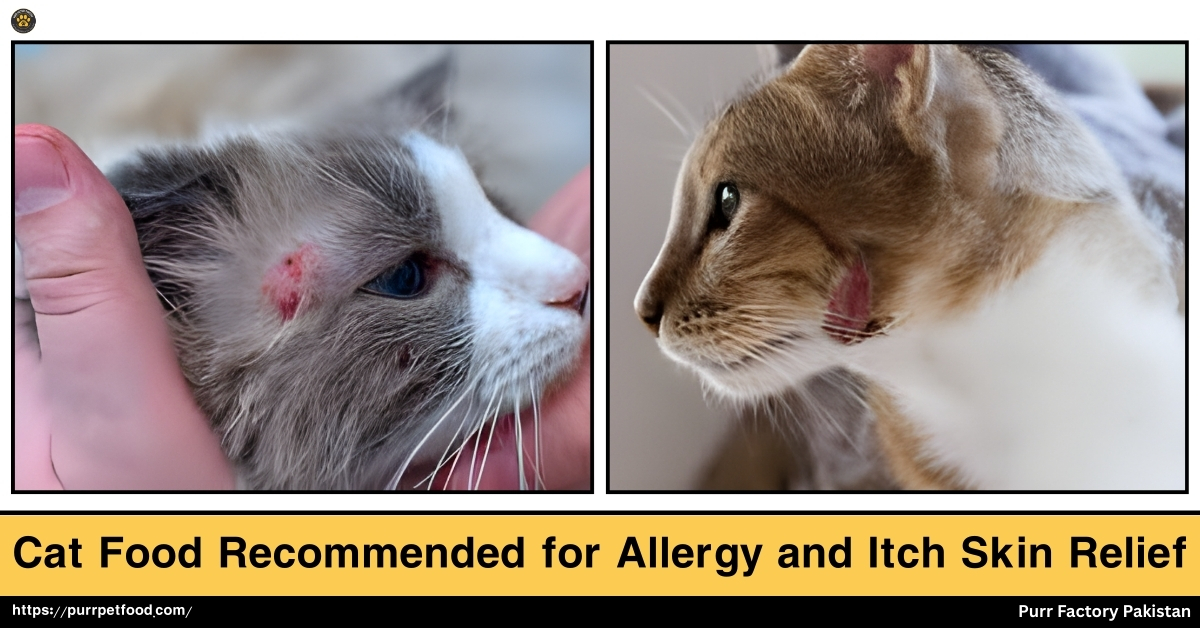
Understanding Cat Allergies and Itchy Skin
Cat allergies start when the immune system reacts to an ingredient that should normally cause no harm.
This reaction creates inflammation inside the body, and the skin usually shows the first signs.
When a cat scratches constantly, chews its paws, licks the same area repeatedly, or develops small scabs around the neck and back, these are signals that something inside is triggering irritation.
Many owners assume it is related to weather or grooming, but Cat food is a common cause. Food allergies often appear as persistent itching, redness, fur loss, and digestive problems like vomiting or soft stools.
Because cats cannot speak, their discomfort shows through these behaviors. The longer the reaction continues, the more the skin barrier weakens, leading to dryness, flakes, and slow healing.
Understanding the pattern of allergy symptoms helps owners take the right steps instead of experimenting with random products or creams that only mask the issue for a short time.
Why Food Triggers Allergic Skin Reactions
Food allergies develop when a cat’s immune system becomes sensitive to certain proteins. The system mistakes these proteins for harmful invaders and activates an inflammatory response.
This inflammation affects multiple areas of the body, but the skin and gut are usually the most sensitive.
Most food-allergic cats react to the same common ingredients found in regular diets, such as chicken, beef, fish, dairy, or eggs.
Repeated exposure makes the immune reaction stronger over time. When inflammation increases, the skin loses moisture and becomes more reactive, leading to itching and irritation.
Artificial preservatives, low-quality fats, or mixed protein formulas can worsen the reaction because they overload the digestive system.
The itch cycle becomes constant when the cat continues to eat the triggering ingredient every day.
Removing the specific trigger is the only long-term fix, which is why adjusting the diet is more effective than applying surface treatments.
How Veterinarians Diagnose Food Allergies
Veterinarians rely on elimination diets because they are the only reliable method to diagnose Cat food allergies.
Other tests, such as saliva tests, blood tests, or hair tests, may look convenient, but they do not provide accurate results in cats.
The elimination method removes all suspected proteins and replaces them with a controlled diet containing either a hydrolyzed protein or a novel protein.
This diet must be fed exclusively for eight to twelve weeks without treats, flavored supplements, or table food. During this period, the body clears out allergens, and improvement becomes easier to observe.
If the symptoms reduce, the next step is reintroducing the old food to confirm the allergy. If itching returns, the trigger is identified.
This process takes patience, but it remains the best diagnostic tool. Without proper testing, owners often waste time switching randomly between foods that still contain hidden allergens.
Types of Cat Food That Help With Allergy and Itch Relief
There are three main diet types that support allergy management: limited ingredient diets, novel protein diets, and hydrolyzed protein diets.
Limited ingredient diets simplify the recipe, using one animal protein and one carbohydrate source to reduce the chance of reactions.
This works well for cats with mild sensitivities or those starting their first Cat food trial. Novel protein diets use sources the cat has never eaten, such as rabbit, duck, venison, or kangaroo.
Because the immune system has no prior exposure, these diets reduce the risk of triggering allergies.
Hydrolyzed protein diets break protein molecules into smaller pieces so the immune system cannot recognize them.
These diets offer the highest success rate for severe or long-term allergy symptoms. Choosing the right type depends on the cat’s history, previous food exposure, and severity of symptoms.
The goal is to eliminate triggers and support the body’s natural healing.
Key Ingredients That Reduce Itching and Support Skin Repair
Some nutrients directly support skin health and help control itching. Omega-3 fatty acids, especially EPA and DHA, reduce inflammation and improve the skin’s moisture barrier.
These fatty acids come from fish oil, krill oil, or algae oil and are widely recommended in allergy diets.
Omega-6 fatty acids also play a role because they support overall skin structure and reduce dryness. Zinc helps regulate the immune system and improves skin healing, while biotin supports coat strength and reduces flakiness.
High-quality animal fats keep the skin lubricated and protect it from becoming brittle.
Probiotics and prebiotics help stabilize gut health, and a balanced gut often reduces inflammatory reactions throughout the body.
A complete allergy-friendly diet combines these nutrients in controlled amounts so the skin can rebuild and strengthen over time, reducing sensitivity and flare-ups.
Proven Cat Food Options for Allergy and Itchy Skin Relief
Hydrolyzed protein veterinary diets are the most effective option for severe allergies. These foods break proteins into very small fragments that the immune system cannot detect.
They help cats with chronic scratching, ear inflammation, or long-lasting skin problems. Novel protein formulas are good for cats that have reacted to common proteins like chicken and fish.
Using rabbit, duck, venison, or kangaroo reduces the risk of triggering a reaction. Limited ingredient diets suit cats with mild allergies or those just starting an elimination trial.
These formulas limit the number of ingredients, making it easier to identify what works. Regardless of the type, the key is consistency.
Switching foods too often resets the progress and prevents the body from healing. Sticking to a single, well-chosen diet helps reduce inflammation and keeps symptoms under control.
How to Switch Your Cat’s Food Without Causing More Problems
Switching food too quickly can cause stomach upset, vomiting, or diarrhea. A gradual transition helps the digestive system adjust without stress.
The recommended method is a slow mix over ten days. Start with seventy-five percent old food and twenty-five percent new food for the first three days.
Move to a fifty-fifty mix for the next three days, followed by twenty-five percent old food and seventy-five percent new Cat food for the next three.
After ten days, the cat can fully transition to the new diet. For allergy trials, transition once, then stay consistent.
Feeding treats, flavored medications, or leftovers during the trial can contaminate the process and produce false results.
The goal is to give the diet a fair chance to work without interference. Patience and consistency are essential for success.
Additional Steps to Reduce Itching Along With Diet
Diet plays the main role, but other steps help reduce itching faster. Regular grooming removes loose fur, dander, and irritants that may worsen sensitivity.
Keeping the cat on a proper flea prevention plan is important because flea bites can trigger strong reactions that look similar to food allergies.
Using stainless steel bowls instead of plastic helps prevent chin acne, which can contribute to skin irritation.
Maintaining indoor humidity between forty and fifty-five percent prevents dry skin flare-ups, especially in air-conditioned or heated homes.
Washing bedding regularly removes dust and allergens that may settle on the skin.
Avoiding unnecessary supplements or unverified herbal products prevents additional reactions. Keeping the environment clean and stress-free supports the skin’s recovery and reduces flare risks.
How Long It Takes to See Results
Improvements do not happen instantly, especially if the allergy has been active for months. Most cats show progress at different rates depending on the severity.
Mild itching may improve within two to three weeks. Moderate symptoms usually take four to six weeks to calm down.
Severe allergies, ear issues, or long-term skin damage generally require eight to twelve weeks.
Digestive improvements often appear sooner, while skin changes take time because the body must rebuild the skin barrier.
Hair growth is the slowest part of the recovery. Owners should track weekly progress rather than daily changes.
Consistent feeding, no cheating meals, and patience are key factors that determine how well the diet works.
When to See a Veterinarian
Some symptoms require a veterinarian’s attention even when diet changes are planned. Open wounds, bleeding skin, or severe scabbing need medical treatment because they can develop infections.
Thick debris inside the ears, a strong smell, or swelling around the face may indicate ear infections or underlying issues that do not improve with Cat food alone.
Persistent vomiting, diarrhea, or sudden changes in appetite should also be checked. If the cat loses weight or becomes unusually quiet or aggressive, these may signal deeper health problems.
A veterinarian can rule out parasites, fungal infections, hormonal imbalances, or other conditions that mimic food allergies.
Once other issues are cleared, diet therapy becomes more accurate.
Long-Term Strategy for Managing Food Allergies
Food allergies remain for life, so long-term management depends on controlling exposure to trigger ingredients. Once the right diet is identified, staying consistent is the most effective approach.
Rotating foods randomly can restart symptoms and weaken skin recovery. All treats and supplements should match the same protein source as the main diet.
Checking ingredient labels regularly helps avoid hidden proteins and fillers. Scheduling periodic check-ins with the veterinarian ensures the diet continues to meet nutritional needs.
Most cats manage well on their allergy-friendly diet for years without flare-ups when owners maintain discipline and avoid unnecessary changes.
Long-term results come from stability, proper nutrition, and careful ingredient choices.
Conclusion
Food allergies are one of the most overlooked causes of constant itching, skin irritation, and digestive discomfort in cats.
When a cat reacts to a specific protein or ingredient, the immune system stays in an active cycle that damages the skin and keeps the itch coming back.
The right diet can break that cycle. Limited ingredient diets, novel proteins, and hydrolyzed protein formulas all play a major role in reducing allergic responses by removing the triggers that cause inflammation.
Along with these diets, supporting nutrients like omega-3s, zinc, and probiotics help the skin rebuild its natural barrier.
Relief takes time, and progress depends on consistency. Sticking with the chosen diet, avoiding random treats, and monitoring changes week by week is the real path to improvement.
If symptoms are severe or involve open wounds, ear issues, or sudden behavior changes, veterinary guidance is necessary to rule out other conditions.
With a structured feeding plan and the right food, most cats experience reduced itching, a calmer skin condition, and steady long-term comfort.
Managing allergies is not a quick fix, but the results are worth the patience.