
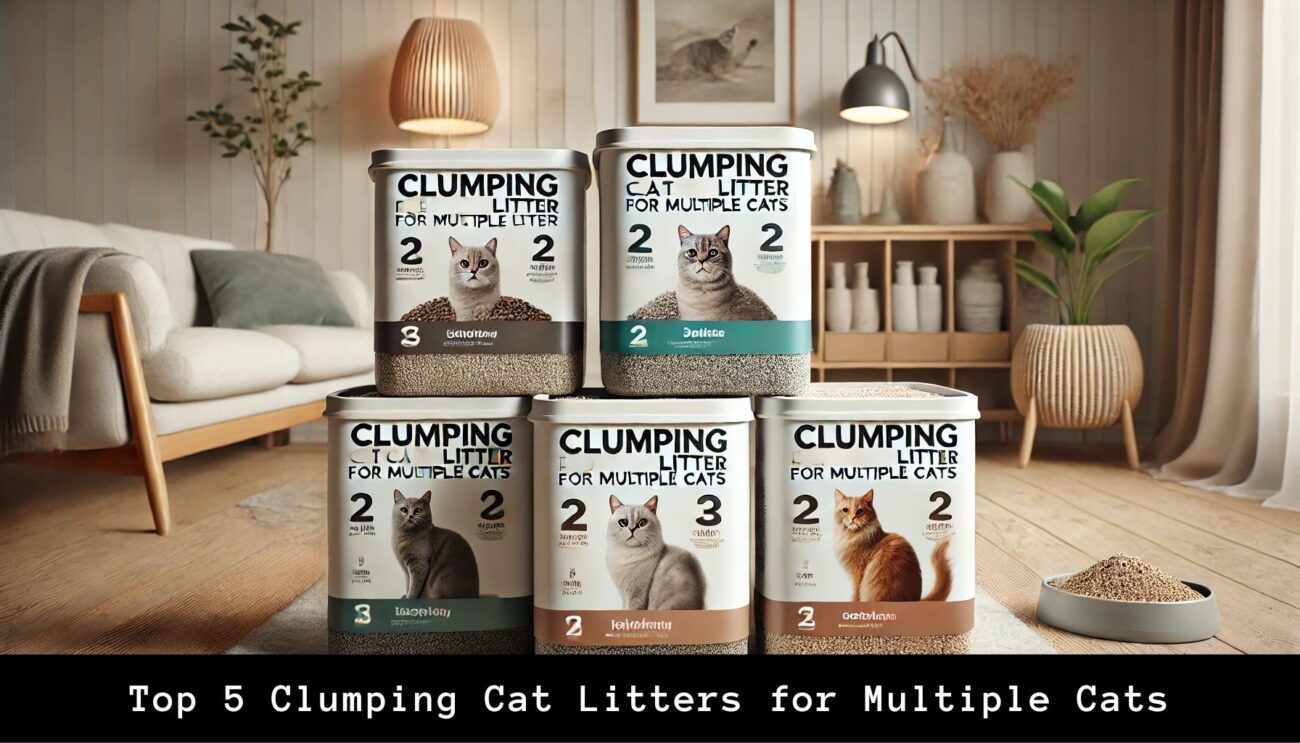
Living with multiple cats means more litter-box traffic, more waste, and faster odor buildup. That makes choosing the right litter especially important. The best clumping cat litter for multiple cats should form firm clumps, absorb moisture quickly, control odors, produce manageable dust, and remain easy to scoop during frequent daily use.
A good multi cat clumping litter for heavy use should also perform consistently as several cats use the boxes throughout the day. However, litter performance is only part of the solution. The number of litter boxes, cleaning frequency, litter depth, placement, and your cats’ individual preferences all affect how clean and comfortable the litter area stays.
This guide compares five popular clumping litters and explains what to consider when choosing litter for a multi-cat home.
Clumping cat litter absorbs urine and binds wet particles together into removable clumps. Instead of replacing all the litter after every use, you can scoop out urine clumps and solid waste while leaving cleaner litter behind.
This makes clumping litter convenient for homes where litter boxes need frequent cleaning.
| Clumping Litter | Non-Clumping Litter |
| Forms removable clumps | Absorbs moisture without firm clumps |
| Allows targeted scooping | Requires a different cleaning routine |
| Easy to spot-clean frequently | Soiled areas can be harder to separate |
| Common in multi-cat homes | May suit some cats and households |
For more information, read about the benefits of clumping cat litter.
More cats usually mean more frequent litter-box use.
The basic relationship is:
More Cats → More Waste → Faster Odor Buildup → More Scooping → Greater Demand on the Litter
A good multi cat clumping litter therefore needs to handle repeated use without quickly becoming wet, difficult to scoop, or excessively odorous.
The most important characteristics include:
Litter alone cannot compensate for too few boxes or poor cleaning, so the entire litter-box setup should be considered.
The following popular options represent different approaches to clumping, odor control, dust, weight, and litter materials. Product formulations can change, so always check the current package instructions and specifications before buying.

Dr. Elsey’s Precious Cat Ultra is a clay-based clumping litter commonly chosen by households looking for firm clumping and straightforward daily scooping.
Its dense clay formulation is designed around clumping performance rather than lightweight handling.
Best suited for: owners who prioritize firm clumps and frequent scooping.
Consider: clay litter can be relatively heavy, especially when purchasing and handling larger bags.
Arm & Hammer Clump & Seal Multi-Cat is designed specifically for households with multiple cats and emphasizes clumping and odor management.
It may appeal to owners who are particularly concerned about litter-box odor in frequently used boxes.
Best suited for: multi-cat homes where odor management is a major priority.
Consider: check the specific formula for fragrance if one or more cats prefer unscented litter.
Fresh Step offers multi-cat clumping formulas intended for frequent litter-box use.
When comparing a Fresh Step product, look beyond its multi-cat label and evaluate the specific formula for:
Best suited for: owners looking for a widely recognized multi-cat formula.
Consider: Fresh Step has different variants, so performance and fragrance can differ by product.
World’s Best Cat Litter differs from traditional bentonite formulas because it uses plant-based material.
It can be useful for owners comparing clay and plant-based clumping options.
Best suited for: households interested in a plant-based alternative.
Consider: clumping behavior, texture, tracking, price, and cat acceptance can differ from clay litter.
Follow manufacturer and local waste-disposal guidance rather than assuming any litter is appropriate for flushing through every plumbing system.
Tidy Cats offers multiple clumping formulas, including products marketed toward multi-cat households.
When comparing individual variants, check:
Best suited for: owners who want multiple formula choices within one product range.
Consider: specifications vary considerably between individual Tidy Cats formulas.
Bentonite is widely used in clumping cat litter because of its moisture-absorbing and binding properties.
The basic relationship is:
Bentonite Clay → Moisture Absorption → Binding → Clump Formation
This can make bentonite useful in multi-cat households where boxes require frequent spot cleaning.
Potential advantages include:
Things to compare include:
You can explore imported bentonite cat litter when comparing available options.
Both can work in multi-cat households, but their properties differ.
| Feature | Clay/Bentonite | Plant-Based |
| Clumping | Often strong | Depends on material |
| Weight | Usually heavier | Often lighter |
| Dust | Formula-dependent | Formula-dependent |
| Tracking | Depends on granule size | Depends on material |
| Odor control | Formula-dependent | Formula-dependent |
| Price | Varies | Varies |
| Cat acceptance | Individual | Individual |
Instead of choosing by material alone, compare the actual formula and how your cats respond to it.
Another important decision is whether to use scented or unscented litter.
Scented litter contains added fragrance intended to alter or mask litter-box odors.
Some owners prefer this, while some cats may dislike strong fragrances.
Unscented formulas do not depend on added fragrance. They may be a better choice when a cat or owner appears sensitive to strong scents.
Remember:
Fragrance ≠ Waste Removal
Even strongly scented litter still needs frequent scooping.
Compare scented bentonite cat litter and unscented bentonite cat litter according to your cats’ preferences.
A commonly used guideline is:
Number of Cats + One Extra Litter Box
That means:
| Cats | Suggested Starting Point |
| 1 | 2 boxes |
| 2 | 3 boxes |
| 3 | 4 boxes |
| 4 | 5 boxes |
This is a rule of thumb rather than an absolute requirement for every home.
Box size, home layout, cat relationships, mobility, and individual preferences also matter.
Explore suitable litter boxes when planning a multi-cat setup.

Do not treat several litter boxes sitting side by side as the only solution for multiple cats.
Where practical, distribute boxes across accessible locations.
Good locations should generally be:
Multi-cat households should also consider social relationships between cats.
Multi-cat litter boxes generally need more frequent cleaning because waste accumulates faster.
Check boxes at least daily and clean them as often as their usage requires.
A heavily used box may require scooping more than once per day.
Use:
Number of Cats + Number of Boxes + Actual Usage = Cleaning Frequency
A suitable cat litter scoop can make regular removal of firm clumps easier.
There is no universal replacement schedule for every household.
Replacement frequency depends on:
Remove feces and urine clumps regularly.
Replace the litter removed during scooping as needed to maintain an appropriate depth.
Empty the box and replace the litter when the remaining material becomes excessively soiled, difficult to maintain, or according to the product’s cleaning instructions.
Daily scooping and full replacement are not the same thing.
Cats may notice changes in texture and scent.
If your cats are sensitive to change, introduce the new litter gradually.
A simple transition can be:
Current Litter → Add Small Amount of New Litter → Gradually Increase → Monitor Box Use
Watch for:
If a cat suddenly stops using the litter box, do not automatically assume the new litter is the only possible cause.
Litter-box avoidance can have several causes:
Litter-Box Avoidance
→ Dirty Box
→ Litter Texture
→ Strong Fragrance
→ Box Size
→ Box Location
→ Conflict With Another Cat
→ Stress
→ Medical Problem
A sudden or persistent change in litter-box habits can sometimes indicate a health problem and deserves veterinary attention.
Suitability depends on the kitten’s age, behavior, and the specific litter product.
Very young kittens may investigate litter with their mouths, so check product instructions and ask your veterinarian which litter type is appropriate.
Monitor kittens for:
Repeated litter eating should not be ignored.
There is no single litter that works for every sensitive cat.
Useful characteristics to consider include:
Cats that appear sensitive to fragrance may prefer unscented litter.
If a cat has persistent coughing, breathing problems, skin irritation, or another health concern, changing litter should not replace veterinary evaluation.
Multi-cat households usually consume litter faster, making larger packs or bulk purchases potentially convenient.
Benefits can include:
Before buying large quantities, consider:
Bulk purchasing only saves money when the unit price and actual usage make sense.
Do not compare litter using bag price alone.
Start with:
Pack Price ÷ Pack Size = Basic Unit Cost
Then consider:
Unit Cost + Clumping Efficiency + Litter Lost Per Scoop + Replacement Frequency = Practical Cost
For example, inexpensive litter that forms weak clumps may cause more clean litter to be removed during scooping.
A more expensive litter that creates compact clumps may sometimes last longer.
For locally available options, you can compare cat litter based on pack size, formula, and your household’s usage.
Consider trying another formula if you consistently notice:
Change should be based on actual performance and cat acceptance rather than marketing terms alone.
The best clumping cat litter for multiple cats is not determined by one feature or marketing label.
A better decision path is:
Multiple Cats → Higher Box Usage → Strong Clumping → Absorption → Odor Control → Low Dust → Cat Acceptance → Easy Maintenance → Practical Cost
For a busy multi-cat household, a multi cat clumping litter for heavy use with firm, scoopable clumps can make daily maintenance easier. But even the best litter works properly only when cats have enough clean, accessible litter boxes.
Compare the material, clumping performance, scent, dust, tracking, pack size, and cost per use—and most importantly, pay attention to which litter your cats are comfortable using.