
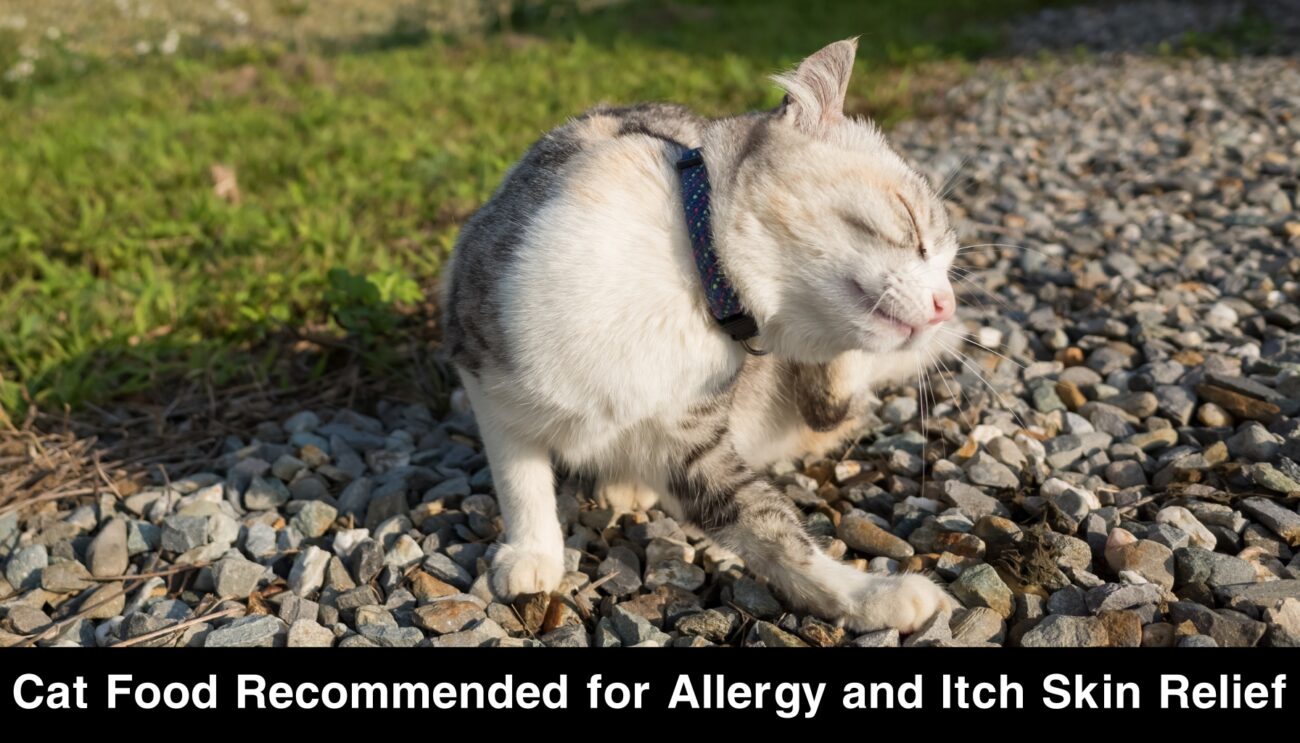
If your cat has itchy, irritated, or dry skin, food may be part of the problem but it is not always the cause. Fleas, environmental allergies, parasites, infections, and other skin conditions can produce similar symptoms.
The best cat food for cats with skin allergies depends on the underlying trigger. When a food allergy is suspected, veterinarians often use a controlled elimination diet with a hydrolyzed protein or a truly novel protein. The goal is not simply to choose a “sensitive skin” food, but to identify the trigger while keeping your cat’s diet complete and balanced.
Yes, food can sometimes contribute to itchy skin in cats, especially when a cat develops an immune reaction to a dietary protein.
However, food allergy is only one possible cause.
A better way to think about feline itching is:
Itchy Skin → Flea Allergy → Food Allergy → Environmental Allergy → Parasites → Skin Infection
This is why persistent itching should not automatically be treated with a food change alone.
Several different conditions can cause scratching, licking, hair loss, and irritated skin.
Some cats are highly sensitive to flea saliva.
Even a small number of flea bites can trigger:
Flea allergy should always be considered when a cat has persistent itchy skin.
Food allergy occurs when the immune system reacts to a dietary component, often a protein.
Possible triggers can vary from cat to cat.
Common proteins in cat food may include:
These foods are not inherently unhealthy. The important question is whether a particular protein is a trigger for the individual cat.
Cats may also react to environmental allergens such as:
Environmental allergies can cause skin symptoms that look very similar to food allergy.
Mites, bacterial infections, yeast-related problems, and other skin conditions can also cause itching.
Persistent scratching may damage the skin barrier and make secondary infection more likely.
A food allergy is an immune-mediated adverse reaction to a dietary ingredient.
The trigger is often a protein the cat has eaten previously.
A useful relationship is:
Dietary Protein → Immune Reaction → Skin or Digestive Symptoms
Continued exposure to a confirmed allergen can maintain symptoms.
That does not mean common proteins such as chicken or fish are “bad” for all cats.
Food allergy and food intolerance are not the same thing.
| Feature | Food Allergy | Food Intolerance |
| Immune system involved | Yes | Not necessarily |
| Itchy skin possible | Yes | Less typical |
| Digestive symptoms possible | Yes | Yes |
| Main diagnostic approach | Elimination diet + challenge | Diet history and response |
| Trigger | Often dietary protein | Various ingredients or mechanisms |
Both may cause digestive signs, but persistent itching is more strongly associated with allergic skin disease.
Possible signs include:
Some cats show mostly skin symptoms, while others may also have digestive signs.
These symptoms are not specific to food allergy, so they should be interpreted alongside flea control, environmental history, and veterinary examination.
Cat food for cats with skin allergies should be chosen according to the suspected cause.
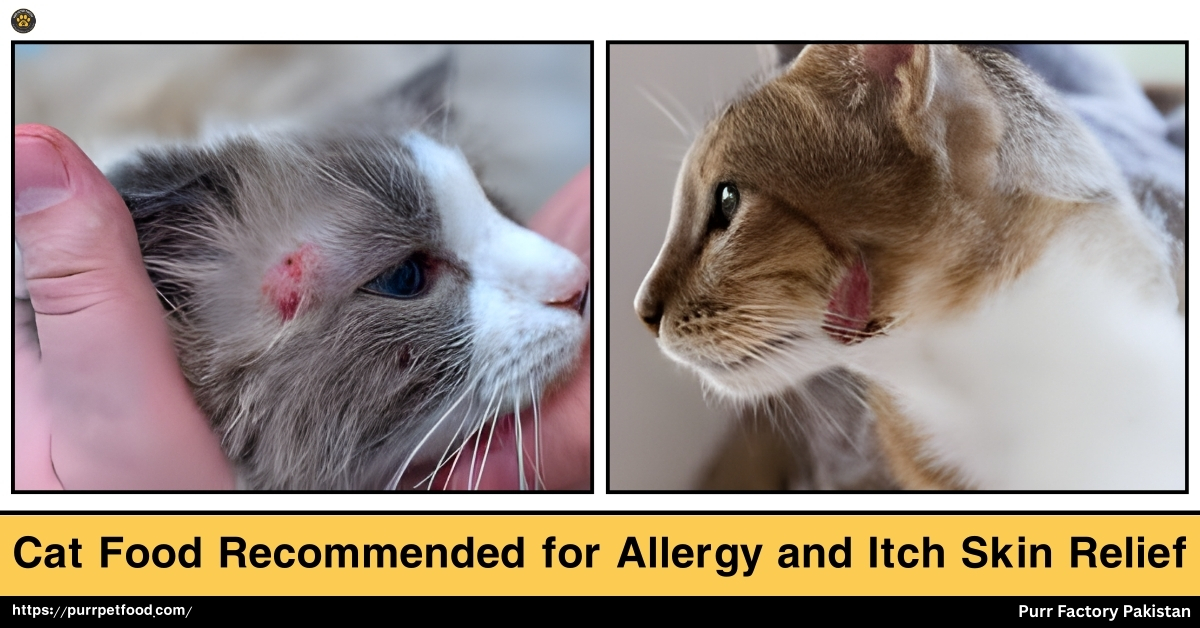
When food allergy is being investigated, the most useful diets are usually:
The food should also be:
You can browse the wider cat food range, but a diagnostic food trial should ideally be chosen with veterinary guidance.
There is no single universal best cat food for cats with skin allergies.
The right food depends on:
For a suspected food allergy, a veterinarian may recommend a hydrolyzed diet or a truly novel protein diet.
For a cat with a confirmed allergy, long-term food should avoid the known trigger while still meeting complete nutritional needs.
A novel protein is a protein source that the individual cat has not previously eaten.
Possible examples may include:
However:
Novel does not mean rare.
A protein is only novel if it is new to that cat.
For example, duck is not a novel protein if your cat has already eaten duck-based foods or treats.
Hydrolyzed cat food contains proteins that have been broken into smaller fragments.
The goal is to reduce recognition by the immune system.
These diets are often used in food-allergy investigations because they may reduce exposure to intact protein structures that could trigger a reaction.
Hydrolyzed food should not be described as guaranteed “allergy-free,” but it can be a useful diagnostic and management option.
| Factor | Novel Protein Diet | Hydrolyzed Protein Diet |
| Protein type | Intact, previously unexposed | Broken into smaller fragments |
| Prior food history important | Very important | Less dependent on prior exposure |
| Used in elimination diets | Yes | Yes |
| Cross-contact can matter | Yes | Yes |
| Veterinary guidance useful | Yes | Yes |
Both approaches can be appropriate depending on the individual cat.
Limited-ingredient diets may be helpful in some situations, but they are not automatically equal to a veterinary elimination diet.
Possible concerns include:
For a diagnostic food trial, strict control of all dietary exposure is important.
The best dry cat food for skin allergies should be selected based on the suspected trigger rather than simply because it is dry.
For a diagnostic trial, a veterinarian may recommend a:
For long-term feeding, the food should:
You can explore available dry cat food options, but remember:
Dry format itself does not treat a food allergy.
The protein source and overall formulation matter more.
Cat food for dry itchy skin should first be chosen according to the cause of the skin problem.
If food allergy is responsible, the trigger needs to be identified and avoided.
If the problem is mainly dry skin rather than allergy, nutrients that support normal skin and coat health may be useful, including:
Diet can support the skin, but it will not correct fleas, parasites, infections, or environmental allergies.
EPA and DHA may support normal skin health and help modulate inflammatory processes.
They can be useful as part of an overall skin-support plan, but they do not remove the underlying food allergy.
Omega-6 fatty acids contribute to normal skin-barrier function and coat quality.
The overall balance of essential fatty acids matters more than simply adding one oil.
Skin and hair contain protein, so a complete diet should provide enough appropriate protein.
Protein quality and overall amino-acid balance are both important.
Zinc and other micronutrients contribute to normal skin and coat health.
Deficiencies can affect the skin, but routine high-dose supplementation is not automatically appropriate.
A nutritionally complete diet is the starting point.
For broader food-quality guidance, read our guide to balanced and nutritious cat meals.
Not necessarily.
Many feline food allergies involve dietary proteins rather than grains.
That means:
Grain-Free ≠ Automatically Hypoallergenic
A grain-free food may still contain a protein the cat reacts to.
Instead of focusing only on grain-free labeling, look at:
For more context about grain-free feeding, see our guide to grain-free cat food and heart health.
Only if chicken is the suspected or confirmed trigger.
Chicken is not automatically harmful to cats with itchy skin.
Removing chicken may help if:
But if the real trigger is another protein or the itching is caused by fleas or environmental allergy a chicken-free diet may make little difference.
A properly controlled elimination diet is one of the main ways veterinarians investigate suspected food allergy.
The basic process is:
Controlled Diet → Symptom Monitoring → Improvement → Dietary Challenge
The diet may use:
During the strict trial, avoid unapproved:
Even small exposures may interfere with the trial.
Track:
If symptoms improve, a controlled dietary challenge may help confirm whether the original food actually caused the reaction.
This step is important because improvement alone does not always prove food allergy.
Skin symptoms usually need several weeks of strict dietary control before the response can be judged properly.
Digestive symptoms may change sooner than skin symptoms.
The exact trial length depends on:
Follow your veterinarian’s recommended timeline rather than expecting a fixed week-by-week response.
A normal food switch and an allergy trial are not exactly the same.
Gradual transition can help reduce digestive upset.
This may involve slowly mixing more of the new food with the current diet.
Once the trial begins, the prescribed diet eventually needs to become the only approved food exposure unless your veterinarian advises otherwise.
Continuing to mix in the suspected food would undermine the diagnostic purpose.
Keep a simple weekly record.
Track:
Photos can also help track changes in:
This makes it easier to judge whether the diet is actually helping.
Yes.
Persistent itching can lead to:
Itching → Scratching/Licking → Skin Barrier Damage → Secondary Infection
Possible warning signs include:
If these occur, changing food alone may not be enough. Veterinary treatment may also be needed.
Wet food is not automatically better for allergies, but it can provide complete nutrition if the formulation is appropriate.
Its main distinction is higher dietary moisture.
For an allergic cat, the most important question remains:
Does this food contain the problem protein?
not:
Is it wet or dry?
You can explore wet cat food when comparing formats.
For more background, see the benefits of wet cat food.
Diet may be only one part of management.
Consistent flea prevention is important because flea allergy can cause severe itching.
Clean food and water bowls regularly.
Some cats with chin irritation may do better with easy-to-clean stainless steel or ceramic bowls.
The key factor is:
Bowl Hygiene
rather than assuming one material automatically prevents allergy.
Appropriate grooming can help remove loose hair and allow owners to check the skin for:
Avoid excessive grooming on already irritated skin.
Do not continually add oils, vitamins, probiotics, or herbal products without considering the complete diet and the underlying cause.
Contact a veterinarian if your cat has:
A veterinarian can help determine whether the problem is related to:
Choosing the best cat food for skin allergies starts with identifying whether food is actually responsible for the itching.
The correct semantic pathway is:
Itchy Skin → Identify the Cause → Food Allergy if Suspected → Controlled Elimination Diet → Novel or Hydrolyzed Protein → Rechallenge → Long-Term Trigger Avoidance
For dry, itchy skin without a confirmed food allergy, complete nutrition with appropriate protein, essential fatty acids, and micronutrients can support normal skin and coat health but diet should not be expected to fix fleas, infections, environmental allergies, or other skin diseases.