
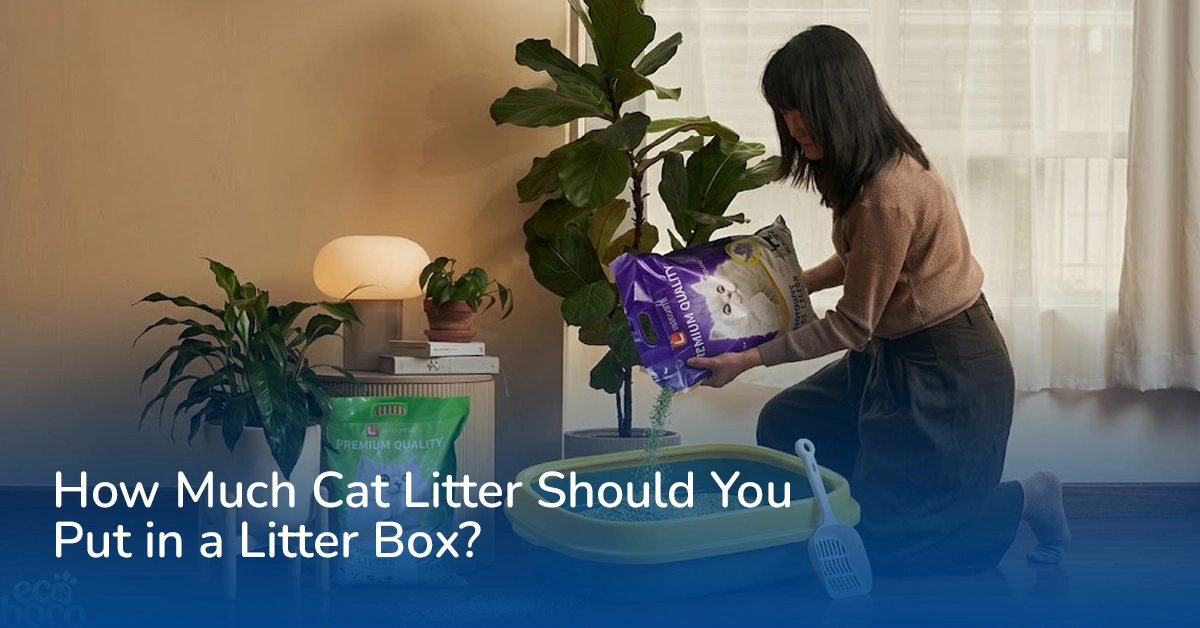
For most standard litter boxes using conventional clumping cat litter, 2–3 inches (5–7.5 cm) of litter is a practical starting point. This gives many cats enough material to dig, cover their waste, and use the box comfortably without unnecessarily overfilling it.
However, the right amount depends on your cat’s digging habits, the size of the litter box, and the type of litter you’re using. Some products, particularly crystal or specialty litters, have different recommended fill levels.
If you’re wondering how much cat litter to put in a litter box, the goal isn’t simply to add more litter. It’s to maintain enough depth for effective absorption, comfortable digging, and easy cleaning while avoiding unnecessary waste.
In this guide, we’ll explain how to measure the right amount, how litter depth affects clumping and odor, and how to adjust it for different cats and litter types.
Recommended starting depth for many conventional clumping litters
5–7.5 cm
Illustrative depth guide, not a universal fill requirement. Always check the litter manufacturer’s instructions.
The correct depth should allow your cat to dig and cover waste while keeping urine from frequently reaching the bottom of the tray.
Here is a simple starting guide:
| Litter Type | Recommended Approach |
| Clumping clay or bentonite | Around 2–3 inches is a common starting point |
| Non-clumping litter | Follow product instructions; depth varies by formula |
| Crystal or silica litter | Use the manufacturer’s recommended fill level |
| Tofu or plant-based litter | Check product guidance and clumping performance |
| Specialty or automatic-box litter | Follow the product and machine instructions |
Remember: The ideal depth isn’t necessarily the same for every cat or litter product.
The amount of litter in the box affects more than how full it looks. It influences moisture absorption, clumping, digging, waste coverage, and cleaning.
When your cat urinates, the litter needs enough material to absorb the moisture.
If the layer is too shallow, urine may reach the tray before it is fully absorbed. This can cause litter to stick to the bottom and make cleaning more difficult.
A suitable depth gives the litter more room to absorb moisture according to its formulation.
Clumping litter absorbs moisture and binds wet particles together.
The process looks like this:
Urine → Absorption → Binding → Clump Formation → Scooping
If there isn’t enough litter, urine may reach the base of the box and form a clump that sticks to the plastic.
However, depth isn’t the only factor. Clumping speed, material quality, and how soon you scoop also affect the result.
You can learn more about these characteristics in our guide to the benefits of clumping cat litter.
Many cats naturally dig before eliminating and cover their waste afterward.
A suitable litter layer allows them to perform these behaviors comfortably.
If the litter is too shallow, your cat may repeatedly scrape the bottom of the tray. On the other hand, some cats may dislike an excessively deep or unstable layer.
Adding more litter than necessary increases the amount used during the initial fill.
Using too little may create other problems, such as sticking and difficult cleaning.
The goal is to find a practical balance between your cat’s comfort, litter performance, and ongoing consumption.
You don’t need special equipment to measure litter depth. A ruler or measuring tape is enough.
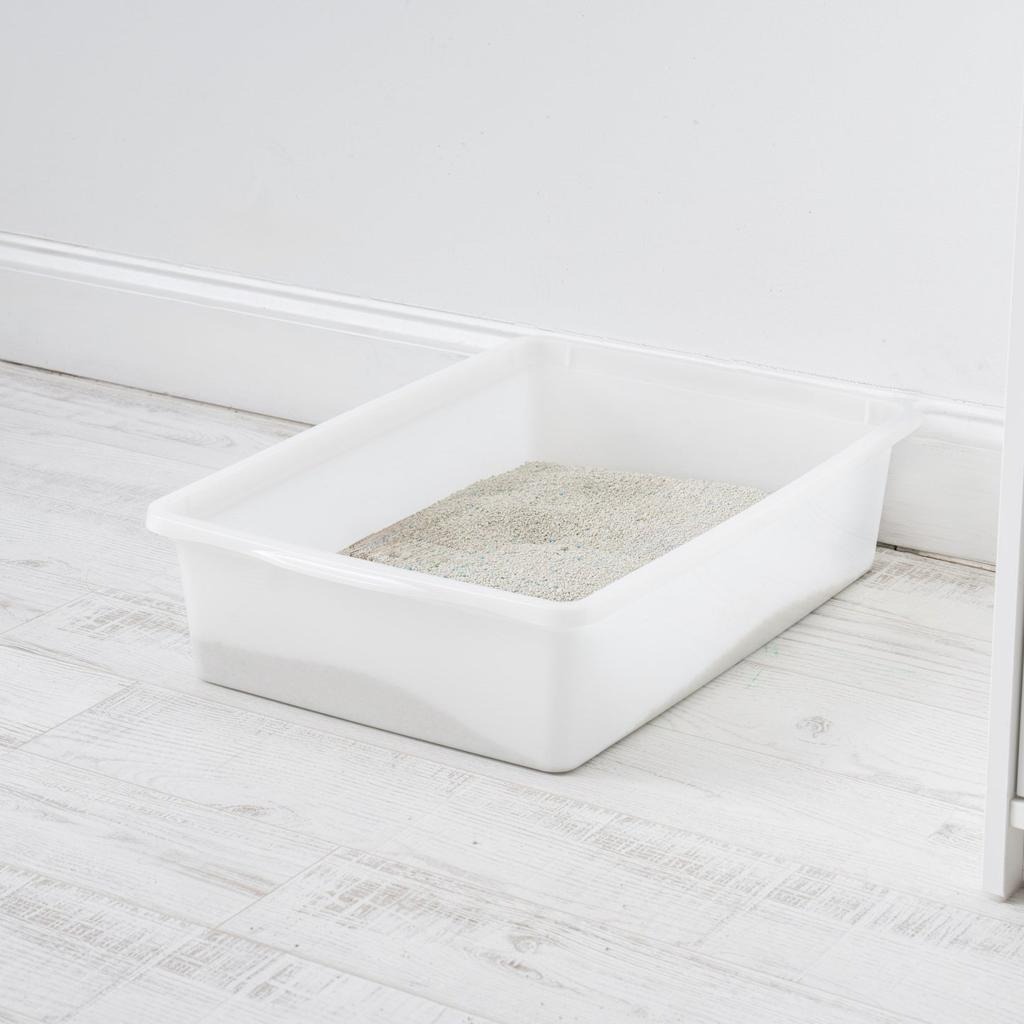
Empty and clean the tray when a full litter change is due. Let it dry before adding fresh litter.
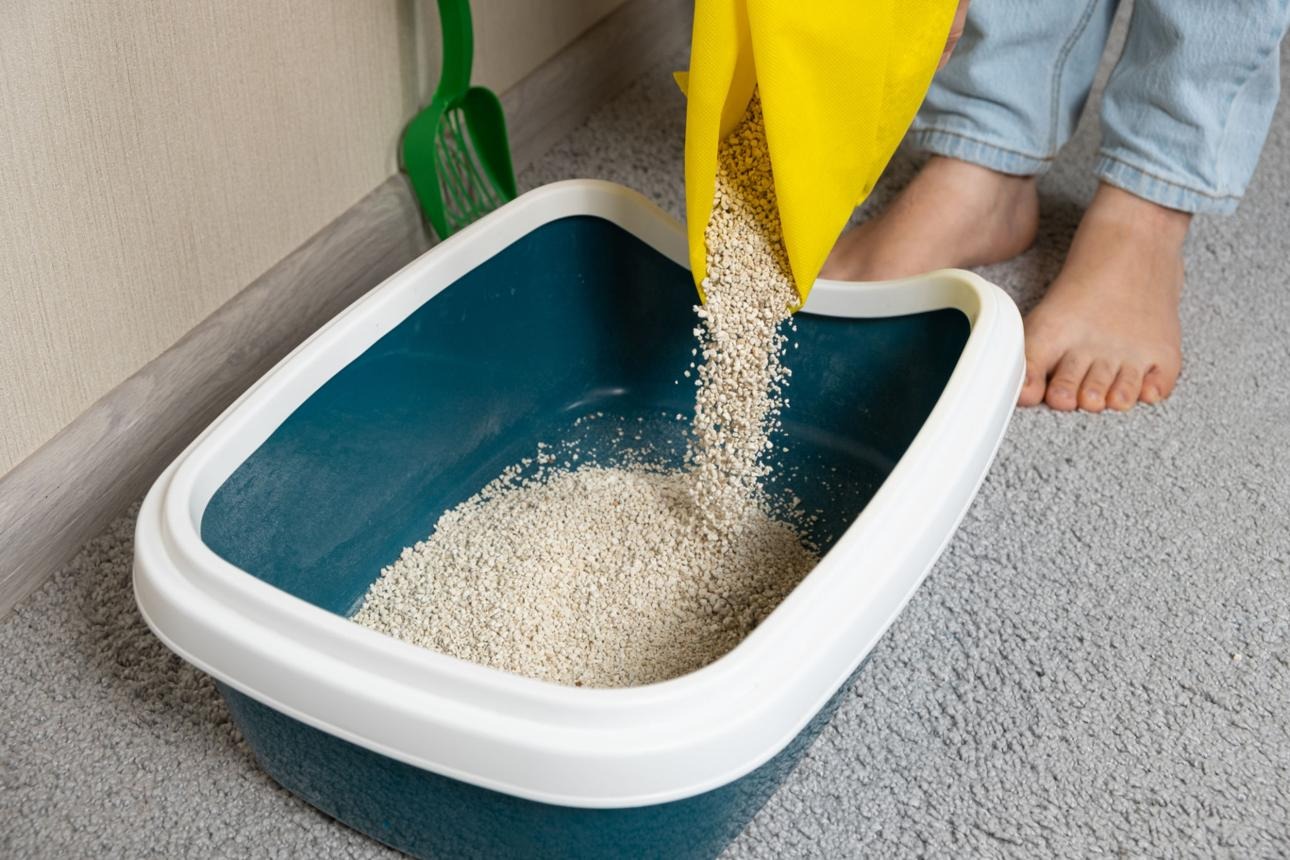
Pour in enough litter to approach the product’s recommended depth. Avoid emptying the whole bag without checking the fill level.
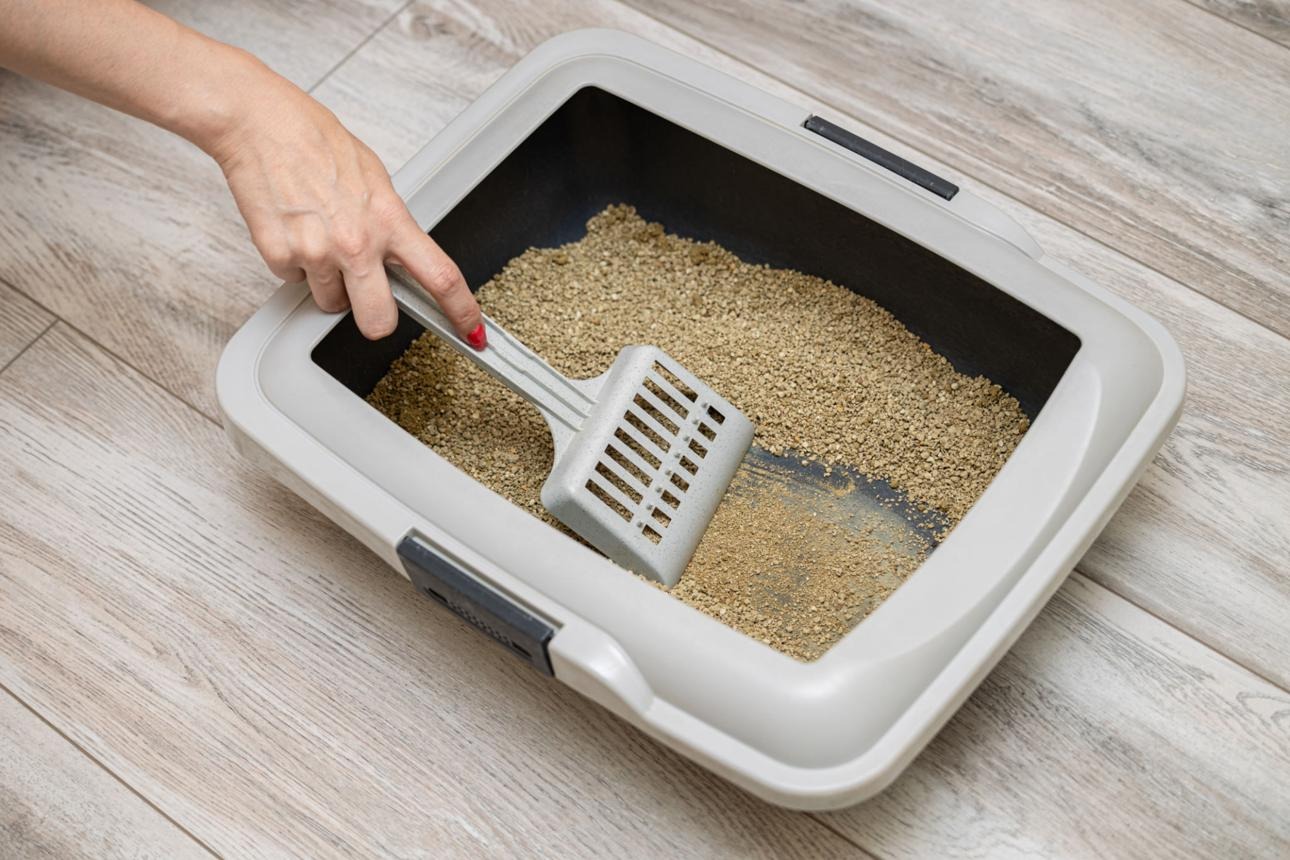
Spread the litter evenly so one corner isn’t much deeper than another.
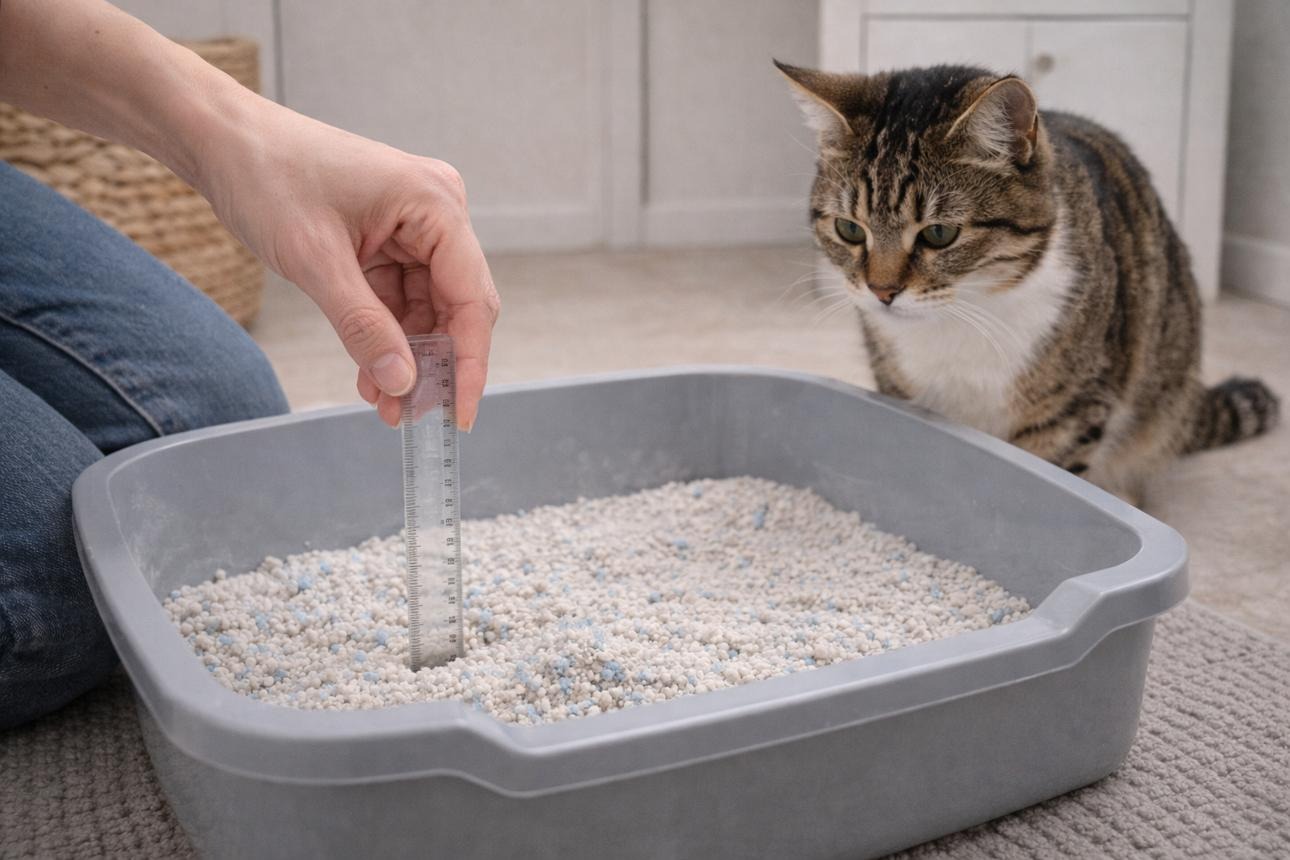
Place a ruler vertically into the litter until it touches the bottom of the tray. Measure from the tray base to the litter surface.
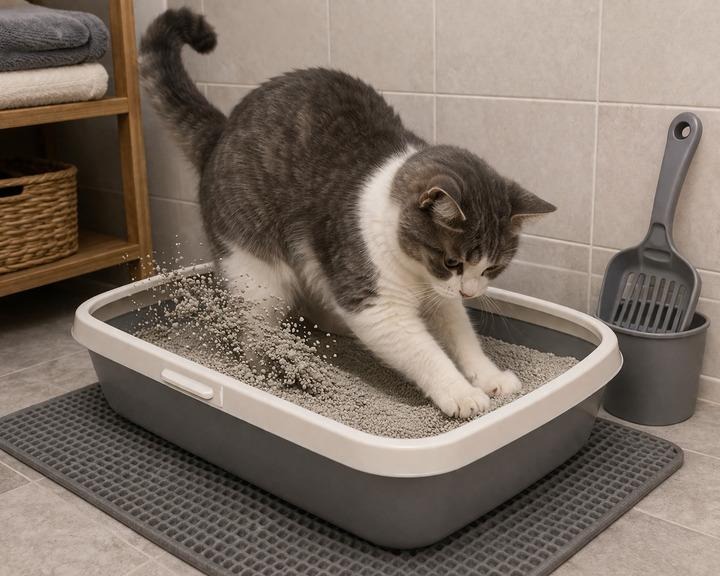
Watch whether your cat digs comfortably, covers waste, or repeatedly kicks large amounts of litter outside the box. Adjust the level gradually if needed.
Once you’ve found a suitable depth, make a note of it. This makes future refills easier.
The number of kilograms required depends on the size of the box and the litter’s density.
A large tray needs more litter than a small one to reach the same depth.
For a rectangular litter box with approximately straight sides:
\[ \text{Volume (L)}=\frac{\text{Length (cm)}\times\text{Width (cm)}\times\text{Depth (cm)}}{1000} \]
For example, if your litter box measures 40 cm long and 30 cm wide, and you want a 6 cm litter depth:
403061000=7.2liters
That means you’ll need approximately 7.2 liters of litter by volume.
Use this calculator to estimate the initial fill volume for your box.
Inside length (cm)
Inside width (cm)
Desired litter depth
6 cm (2.4 inches)
Estimated litter volume
Approximate initial fill, not kilograms
This calculation assumes a rectangular base and a level litter surface. Sloped sides, rounded corners, and product characteristics may change the actual amount.
This is an important distinction when buying cat litter in Pakistan.
Liters measure volume. Kilograms measure weight.
For example, 7 liters of one litter material may weigh more or less than 7 liters of another.
Bentonite clay, silica crystals, and plant-based litter can have different densities.
If you want to calculate the weight required, use the specific product’s bulk density or manufacturer information rather than assuming one liter equals one kilogram.
For many conventional clumping litters, 2–3 inches is a reasonable starting depth.
Clumping litter works by absorbing urine and binding the wet material into removable clumps.
If the litter is too shallow, clumps may stick to the bottom. If the litter is excessively deep, you may use more material than necessary.
Look for three things:
If these conditions are met and the litter matches the manufacturer’s recommended depth, the amount is likely suitable.
You can compare available imported bentonite cat litter products to find a formulation that suits your cleaning routine.
Non-clumping litter absorbs urine without forming the same firm, removable urine clumps.
Because the absorption and maintenance process differs, the correct fill level may also differ.
Rather than automatically using the same depth as clumping litter, follow the product’s recommended amount.
The main considerations are:
For a fuller explanation of how these litter systems differ, see our guide to clumping vs non-clumping cat litter.
Crystal litter can have different fill requirements from conventional clumping clay.
Some crystal litter products are designed to work with a relatively shallow layer, while others have different instructions.
Check the product packaging for the correct depth or quantity.
Adding extra crystals does not automatically mean the litter will perform better.
The right amount depends on the specific product’s absorption system and recommended maintenance.
Tofu, corn, wood, paper, and other plant-based litters differ in granule size, density, and absorption.
Some are clumping; others are non-clumping.
That means a universal depth for all plant-based litter would be misleading.
Use the product instructions as your starting point, then check:
Do not assume a lightweight litter requires the same number of kilograms as bentonite to reach the same depth.
Yes. The internal floor area of the litter box directly affects how much litter is required.
A larger tray needs more litter to maintain the same depth.
For example:
| Internal Box Dimensions | Depth | Approximate Volume |
| 35 × 25 cm | 6 cm | 5.25 L |
| 40 × 30 cm | 6 cm | 7.2 L |
| 50 × 35 cm | 6 cm | 10.5 L |
| 55 × 40 cm | 6 cm | 13.2 L |
These figures are geometric estimates, not product-specific pack recommendations.
A high-sided box can help contain litter kicked during digging, but the height of the sides doesn’t mean you need to fill the tray higher.
Measure the litter layer itself, not the height of the box.
If your cat regularly kicks litter outside the tray, consider whether a larger or higher-sided litter box would help.
Using too little litter can cause several problems.
When there isn’t enough material to absorb urine before it reaches the base, wet litter may stick to the tray.
This can make scooping harder.
A shallow layer can contribute to clumps forming against the plastic.
However, weak clumping can also be caused by the litter formulation or scooping before the clump has developed sufficient strength.
Some cats may scrape the bottom repeatedly when there isn’t enough litter to dig and cover waste comfortably.
Urine residue on the tray may require more scrubbing during cleaning.
Practical solution: If your litter is below the recommended depth, add a little more and observe whether clumping and cleaning improve.
Yes. Overfilling a litter box can create unnecessary mess and increase litter consumption.
Cats that dig vigorously may scatter litter over the edges, especially in shallow-sided boxes.
Adding several extra inches without a product-specific reason increases the initial amount used.
Individual cats have different preferences. Some may be uncomfortable with a very deep or unstable litter surface.
The solution isn’t always to use less litter. Sometimes the better adjustment is a larger tray, higher sides, or a different granule size.
In a multi-cat household, the amount of litter needed depends on the number and size of the boxes not just the number of cats.
For example, two cats using multiple litter boxes will generally require more total litter for the initial setup than one cat using one box.
However, you shouldn’t simply double the depth of one box because two cats use it.
More Cats → More Waste → More Cleaning and Box Capacity Needs
A commonly recommended starting point is one litter box per cat plus one additional box, adjusted for household circumstances and cat behavior.
Each box should have an appropriate litter depth.
More cats also means checking the litter level more frequently because scooping removes material over time.
For heavy-use households, read our guide to the best cat litter for multiple cats.
With clumping litter, some litter leaves the box every time you remove urine clumps.
As a result, the remaining depth gradually decreases.
The routine is simple:
Scoop → Check Depth → Add Fresh Litter if Needed → Level the Surface
You don’t necessarily need to add litter after every single scoop. Instead, check whether the depth remains close to the appropriate level for your product.
For example, if you started with 6 cm of litter and regular scooping reduces the level noticeably, add enough fresh litter to restore the recommended depth.
A suitable litter scoop can help remove waste while allowing loose clean litter to fall back into the tray.
Scooping, topping up, and full replacement are three different maintenance tasks.
| Maintenance Task | What It Means | When to Do It |
| Scooping | Removing feces and urine clumps where applicable | Regularly, typically at least daily |
| Topping up | Replacing litter removed during scooping | When depth falls below the suitable level |
| Full replacement | Emptying remaining litter and cleaning the tray | Based on product instructions, condition, and usage |
There isn’t one universal full-replacement schedule for every cat litter.
Clumping litter and non-clumping litter are maintained differently. The number of cats, box usage, product formulation, and cleanliness all affect how often a complete change is needed.
Adding fresh litter on top of dirty or saturated litter is not a substitute for appropriate cleaning.
Litter sticking to the tray is a common frustration, especially with clumping formulas.
Possible causes include:
First, check whether the litter depth matches the product’s instructions.
Next, observe whether clumps form firmly and can be lifted without breaking.
If you consistently have problems despite maintaining the correct depth, the issue may be related to the litter formula rather than the quantity.
Do not automatically keep adding more litter to solve every sticking problem.
The correct depth is part of a good litter-box setup, but it doesn’t solve every problem.
Avoid overfilling the box. Maintain the recommended level and use a scoop that separates loose litter from waste effectively.
Tracking depends on granule size, weight, your cat’s paws and fur, digging behavior, and box design.
A suitable litter mat and regular cleaning around the box may help.
Odor control depends on more than the amount of litter.
Absorption + Waste Removal + Litter Condition + Box Cleaning = Effective Odor Management
A deeper layer cannot compensate for waste that is left in the box too long.
If fragrance is part of your buying decision, remember that scented cat litter and unscented cat litter can both offer odor-control features depending on their formulations.
Fragrance itself does not replace cleaning.
When shopping for cat litter in Pakistan, it’s useful to consider both the initial fill and the amount you’ll need for regular top-ups and replacements.
Calculate the approximate fill volume using the internal dimensions and desired depth.
Cat litter may be sold by kilograms or liters, depending on the product.
Don’t assume a 10-liter bag is the same as a 10-kilogram bag.
With clumping litter, consumption depends partly on how much material leaves the box during scooping.
With non-clumping litter, the replacement process may differ.
A lower pack price doesn’t always mean a lower cost per use.
Consider:
Both imported and locally manufactured litter should be evaluated using the same practical criteria.
Compare absorption, clumping, dust, tracking, texture, pack size, and cost.
For cat owners in Karachi, Purr Pet Food offers a range of cat litter options to compare according to household needs.
A full bag may contain much more or less than your box needs.
Measure the depth instead.
Clay, crystal, and plant-based formulas may have different fill recommendations.
Weight and volume are not interchangeable.
Fresh litter cannot replace removing waste and washing the box when needed.
Two boxes at the same depth can require very different quantities.
If the product forms fragile clumps, more litter may not solve the underlying issue.
A technically correct fill level isn’t helpful if your cat finds the litter uncomfortable.
Before filling your litter box, check the following:
Knowing how much cat litter to put in a litter box makes everyday cleaning easier and helps you avoid unnecessary litter use.
For many standard clumping litters, 2–3 inches is a sensible starting point, but it isn’t a rule for every product or cat.
The best approach is to:
Measure the Depth → Check Absorption → Observe Your Cat → Adjust if Needed → Maintain the Level
A properly filled litter box should give your cat enough material to dig and cover waste while supporting effective absorption and manageable cleaning.
If you’re setting up a new litter box or changing litter types, explore Purr Pet Food’s cat litter and compare material, clumping performance, pack size, and available options to find a practical fit for your cat and home.