
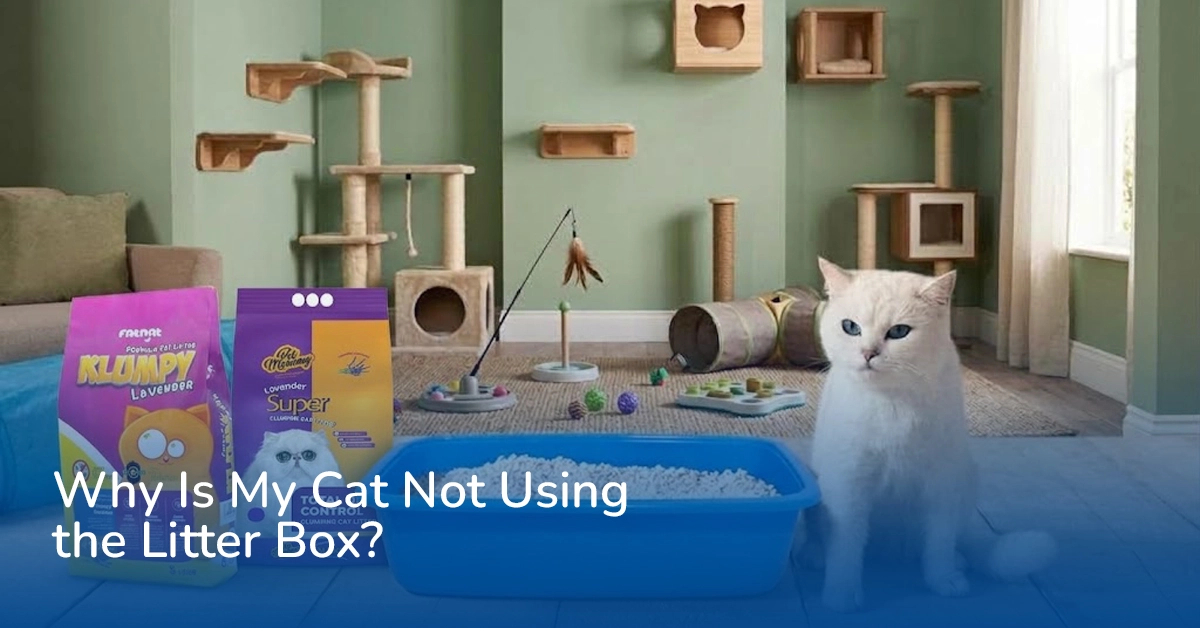
If your cat is not using the litter box, the reason could be a health problem, an uncomfortable litter tray, dirty litter, stress, or a sudden change in its surroundings. The first step is to rule out medical issues, especially if your cat has suddenly stopped using a box it previously used without problems.
Meanwhile, keeping the litter box clean, offering familiar unscented litter, and placing the tray in a quiet, accessible location may help your cat feel comfortable using it again.
Important: If your cat repeatedly tries to urinate but produces little or no urine, appears distressed, or strains while urinating, seek emergency veterinary care immediately. A urinary blockage can be life-threatening, particularly in male cats.
Finding urine on your bed or faeces beside the litter tray can be frustrating. However, cats generally don’t avoid their litter boxes out of revenge or stubbornness. There is usually a physical, environmental, or behavioural reason behind the change.
Understanding that reason is the key to solving the problem without making your cat more stressed.
Cats may stop using their litter boxes for several reasons. Some involve the litter itself, while others are related to health, comfort, or changes at home.
Common causes include:
A cat that has never used a litter box consistently may need a different approach from an adult cat that suddenly stops using one.
For example, a kitten may struggle with a high-sided tray, while an older cat may avoid the same type of box because of joint pain.
The solution depends on identifying the cause rather than changing several things at once.
Before assuming your cat dislikes its litter, consider whether a medical condition could be making urination or defecation uncomfortable.
Cats can hide signs of illness, so even a cat that appears otherwise normal may need a veterinary examination.
Urinary tract conditions can cause pain, urgency, or discomfort when a cat urinates.
Possible problems include feline idiopathic cystitis, bladder stones, urinary tract infections, and urethral obstruction.
A cat experiencing urinary discomfort may begin associating the litter box with pain and urinate elsewhere.
Watch for:
These signs require veterinary attention.
Emergency warning: If your cat is trying to urinate but cannot pass urine, do not wait for home remedies to work. Seek emergency veterinary care immediately.
Some cats continue urinating in their litter boxes but begin defecating outside them.
This may happen because of constipation, diarrhoea, pain, or a negative association with the tray.
For example, a cat that experiences painful bowel movements may avoid the location where the discomfort occurred.
Persistent diarrhoea, repeated straining, vomiting, loss of appetite, or obvious pain should be assessed by a veterinarian.
Changing litter alone will not resolve an underlying digestive condition.
Senior cats may struggle to climb into litter boxes with high sides.
Joint pain, stiffness, or reduced mobility can make entering the tray uncomfortable.
A larger box with a low entrance may improve accessibility.
Place it somewhere easy to reach, especially if your cat has difficulty climbing stairs.
However, a sudden change in an older cat’s litter box habits still warrants veterinary evaluation.
If medical problems have been evaluated, the next step is to examine the litter box and your cat’s environment.
Cats often prefer a clean place to urinate and defecate.
When waste accumulates, the litter may become damp, heavily scented with urine, or uncomfortable to walk on.
Some cats will avoid a tray that hasn’t been scooped frequently enough.
What you can do:
If your cat uses the tray only after it has been freshly cleaned, hygiene may be contributing to the problem.
Clumping litter can make daily waste removal easier when it forms firm, removable clumps. Learn more about the 5 benefits of clumping cat litter.
Cats can be sensitive to the way litter feels beneath their paws.
Some prefer fine, sand-like particles, while others may tolerate larger granules.
A sudden change from one material to another can make the tray unfamiliar.
Strong fragrances may also discourage some cats from using the box.
What you can do:
If your cat stopped using the tray after a litter change, offer a separate box containing the previously accepted litter.
Avoid forcing your cat to use the new material.
When testing another product, consider an unscented option with a comfortable texture and suitable absorbency.
You can explore cat litter options available through Purr Pet Food to compare different formulations.
Remember that changing litter is not a substitute for veterinary care when medical symptoms are present.
Your cat needs enough room to enter the box, turn around, dig, and position itself comfortably.
A tray that is too small may feel restrictive.
High sides can also create problems for kittens, senior cats, and cats with mobility difficulties.
As a practical starting point, many cat-care recommendations suggest a litter box approximately one and a half times the cat’s body length, measured from nose to the base of the tail.
What you can do:
Choose a spacious tray with an entrance your cat can use comfortably.
If your cat is elderly or has mobility problems, consider a low-entry design.
Some cats prefer open litter boxes because they provide visibility and more room to move.
For additional setup ideas, read our guide to essential cat accessories.
Even a clean litter box may be ignored if its location makes your cat feel unsafe.
Cats need a place where they can use the tray without being startled or trapped.
Common placement problems include:
What you can do:
Place the box in a quiet, accessible location with reasonable ventilation.
Your cat should be able to approach and leave without being cornered by another animal.
Avoid placing litter boxes directly beside food and water bowls.
Cats can be sensitive to changes in their environment.
Moving to a new home, introducing another pet, rearranging furniture, or having unfamiliar visitors may contribute to stress.
In some cases, a cat may begin urinating outside the litter box after these changes.
What you can do:
Maintain a predictable routine and provide quiet resting areas.
Make sure your cat has access to food, water, scratching surfaces, hiding places, and litter boxes without interference from other pets.
Avoid forcing interactions between animals.
If the behaviour continues, seek advice from a veterinarian or qualified feline behaviour professional.
Sharing one litter box can create problems when several cats live together.
Some cats may block another cat’s access to the tray, even without obvious fighting.
Others may avoid a box that already contains another cat’s waste.
A common starting recommendation is one litter box per cat, plus one extra.
| Number of Cats | Suggested Starting Number of Litter Boxes |
| 1 cat | 2 boxes |
| 2 cats | 3 boxes |
| 3 cats | 4 boxes |
| 4 cats | 5 boxes |
Spread the boxes across different accessible locations instead of placing all of them together.
If you have several cats, our guide to clumping cat litter for multiple cats can help you understand litter characteristics that make routine cleaning easier.
A cat may begin avoiding a litter box after experiencing pain, fear, or another unpleasant event while using it.
For example, a cat startled by a loud appliance near the tray may become reluctant to return.
Similarly, painful urination can cause a cat to associate the box with discomfort.
What you can do:
Address the underlying problem first.
Offer a clean, accessible box in a quiet location.
Avoid physically placing your cat into the box against its will.
Never punish your cat for accidents. Punishment can increase fear and make the problem harder to resolve.
Once you understand the possible causes, follow a consistent approach rather than making several sudden changes.
Arrange a veterinary examination for sudden or persistent litter box avoidance.
Tell the veterinarian when the behaviour started, whether your cat is urinating or defecating outside the box, and whether you’ve noticed other symptoms.
If your cat cannot urinate, seek emergency care.
Cats may return to places where urine odour remains.
Clean affected surfaces with a pet-safe enzymatic cleaner appropriate for the material.
Follow the product instructions and keep your cat away from treated areas until they are safe.
Avoid ammonia-based cleaning products because their smell may resemble urine.
Scoop waste daily and inspect the tray for damp litter or residue.
Replace contaminated litter and wash the box as needed.
Keep the surrounding floor clean, especially if your cat tracks litter outside the tray.
Choose a box that is large enough for your cat to turn around easily.
For cats with mobility problems, use a low-entry tray.
If your cat dislikes covered boxes, offer an open alternative.
If your cat previously used a particular litter successfully, consider offering it again.
Avoid abruptly switching fragrances or textures.
If you want to try another litter, place it in a separate box so your cat can choose between options.
Place the tray away from loud appliances, crowded areas, and places where other pets may interfere.
Keep access available throughout the day and night.
Provide separate litter boxes and other resources in multi-cat households.
Maintain regular feeding and play routines.
Give your cat opportunities to rest and hide without disturbance.
Keep a simple record of:
These observations can help your veterinarian or behaviour professional identify patterns.
Urinating outside the litter box and urine marking can look similar, but they may have different behavioural explanations.
A cat may squat and leave a puddle on a horizontal surface such as a floor, carpet, or bed.
Possible causes include urinary discomfort, litter box avoidance, or a preference for another surface.
Urine marking often involves a cat standing with its tail raised and depositing a relatively small amount of urine onto a vertical surface.
Spraying can occur in response to territorial or social factors.
However, these patterns are not definitive. Some cats mark horizontal surfaces, and medical conditions can occur alongside marking behaviour.
| Behaviour | Possible Explanation | Recommended Action |
| Large puddle on the floor | House soiling or medical issue | Veterinary assessment and box review |
| Urine on a vertical wall | Possible marking | Assess health, stress, and territory |
| Repeated straining with little urine | Possible urinary obstruction | Emergency veterinary care |
| Urinating on bedding | Medical, stress, or surface preference | Veterinary assessment and environmental review |
Do not assume that spraying is always a purely behavioural problem.
Some cats urinate normally in the litter box but defecate elsewhere.
This can happen for several reasons.
A cat experiencing painful bowel movements may avoid the tray.
Signs such as repeated straining, hard stools, vomiting, reduced appetite, or persistent diarrhoea require veterinary attention.
Some cats prefer a separate area for urination and defecation.
A small or dirty box may discourage them from using it for both purposes.
Providing an additional clean tray may help.
A cat may prefer a different location or surface after developing an unpleasant association with its usual litter box.
Observe where accidents occur and discuss persistent behaviour with your veterinarian.
Avoid assuming the problem is simply poor training.
If your cat’s health has been evaluated and litter preference appears to be part of the problem, the material inside the tray deserves attention.
The best litter is not necessarily the most expensive or the most heavily scented.
It should be comfortable for your cat and practical to maintain.
Some cats are sensitive to added fragrances.
An unscented formulation can be a reasonable option when a cat appears uncomfortable with perfumed litter.
Many cats prefer a fine, comfortable digging surface, but individual preferences vary.
If your cat dislikes a new litter, offer a familiar alternative rather than forcing the change.
Firm clumps make urine-soaked material easier to remove.
This helps keep the box clean between full litter changes.
However, strong clumping alone will not resolve stress, pain, or a poorly located tray.
When introducing new litter, give your cat a choice where practical.
Providing two boxes with different litter options can help you observe which material your cat accepts.
| Litter Type | Potential Advantage | What to Consider |
| Clumping bentonite | Forms removable urine clumps | Dust, texture, and clump quality vary |
| Unscented litter | Avoids added fragrance | Still requires cleaning |
| Silica crystal litter | Absorbs moisture | Texture may not suit every cat |
| Tofu or plant-based litter | Alternative material and texture | Performance varies by formulation |
| Scented litter | Added fragrance | Some cats may avoid strong scents |
If your cat has already accepted a particular litter, maintaining that familiar option may be more useful than switching products unnecessarily.
Cat owners in Pakistan may face practical challenges involving limited indoor space, warm weather, and shared household areas.
These factors don’t automatically cause litter box avoidance, but they can affect where a tray is placed and how comfortable it remains.
In Karachi apartments, litter boxes are sometimes placed in bathrooms, utility areas, or balconies to keep them away from living spaces.
Choose a location that is accessible, safe, and comfortable for your cat.
A bathroom can work if the door remains open or your cat has reliable access.
Avoid exposed balconies where heat, rain, or safety risks may create problems.
Keep the litter box away from direct sunlight and excessive heat.
Store unused litter in a dry location.
Check whether moisture is affecting the litter’s condition.
Good ventilation can help maintain a more comfortable environment, but avoid placing the box in a location that feels unsafe or exposed.
In households with several cats, provide enough litter boxes and distribute them across different areas.
Watch for subtle signs of competition, such as one cat waiting near a doorway or blocking access to a tray.
A separate box in a quiet location may help a more timid cat feel secure.
A change in litter box habits may be the first noticeable sign of illness.
Seek veterinary advice promptly if your cat suddenly stops using the litter box, even if it otherwise seems well.
Suspected urinary blockage is an emergency. Do not wait for the next day or try home remedies.
A veterinarian can determine whether further testing or treatment is necessary.
If your cat is not using the litter box, the most important step is understanding why. Sometimes the solution involves improving hygiene, changing the box location, or offering a more comfortable litter material.
In other cases, the behaviour may indicate pain, urinary problems, digestive discomfort, or stress that requires professional attention.
Start by checking your cat’s health, then review the litter box setup and make gradual changes based on your cat’s needs.
At Purr Pet Food, we understand that litter preferences can vary from one cat to another. Choosing comfortable litter and maintaining a clean, accessible tray are important parts of everyday cat care.
If you’re comparing different litter materials, explore our local cat litter collection to find suitable options for your cat’s routine.
A comfortable litter box starts with understanding your cat’s needs, not forcing your cat to change its behaviour.
WhatsApp us