
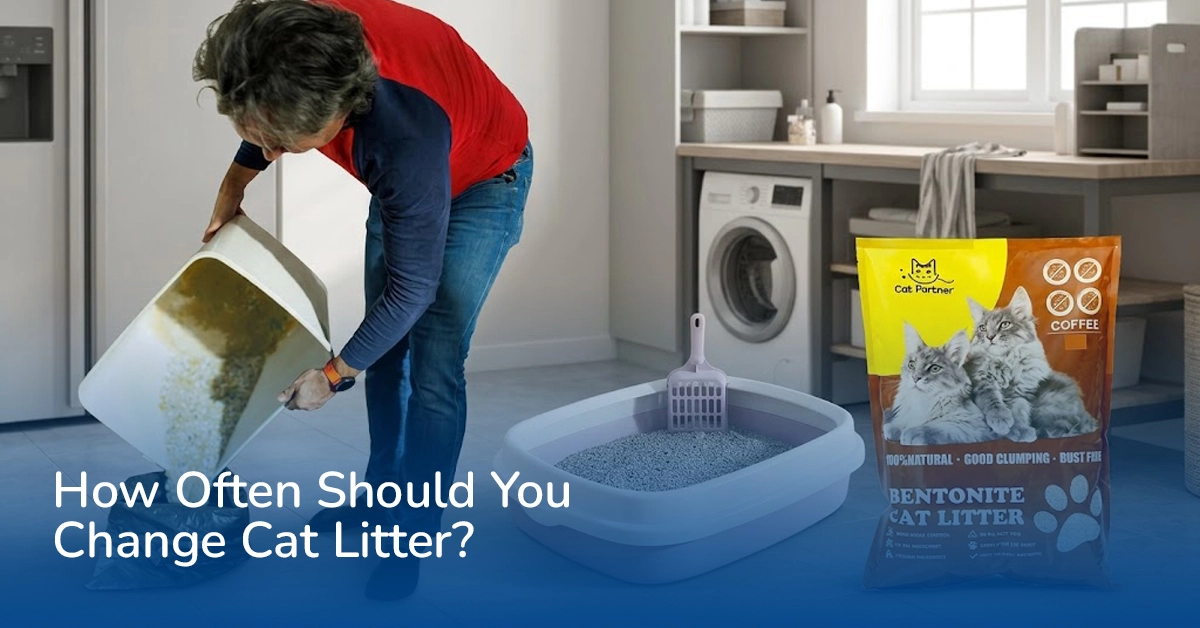
You should scoop your cat’s litter box at least once a day, but completely replacing the litter depends on the type you use, the number of cats, and how quickly it becomes dirty. Clumping litter can often be maintained longer through regular scooping, while non-clumping litter generally requires more frequent full changes because urine remains absorbed in the material.
If you’re wondering how often to change cat litter, the most important thing to understand is that scooping, topping up, replacing litter, and washing the box are four different cleaning tasks.
A litter box can look clean after scooping but still contain urine-soiled material, moisture, or residue. That’s why the right maintenance routine matters more than following the same replacement schedule for every litter product.
In this guide, we’ll explain when to scoop, when to replace all the litter, how to recognize a dirty litter box, and how to maintain different types of cat litter without unnecessary waste.
For most households, daily scooping is the foundation of litter-box hygiene. Full replacement depends on the litter material, product instructions, and actual condition.
| Maintenance Task | How Often? | Purpose |
| Scooping feces and urine clumps | At least once daily; more often when needed | Remove waste before it accumulates |
| Adding fresh litter | When the level drops below the recommended depth | Maintain absorption and digging comfort |
| Completely replacing clumping litter | According to product instructions and litter condition | Remove remaining contamination |
| Completely replacing non-clumping litter | Generally more frequently than clumping litter | Remove urine-soiled material |
| Replacing crystal litter | Follow the manufacturer’s schedule and saturation indicators | Maintain moisture absorption |
| Washing the litter box | During full changes and whenever visibly dirty | Remove residue and lingering odors |
There is no single replacement interval that works for every cat, litter material, or household.
For example, a box used by one cat may need a different cleaning routine from a heavily used box in a multi-cat home.
The better approach is to combine regular waste removal with checks for odor, moisture, clumping performance, and litter condition.
Many cat owners use the phrase “changing cat litter” to describe several different tasks.
Understanding the difference makes it easier to keep the box clean without throwing away usable litter.
Scooping means removing feces and, with clumping litter, urine clumps.
When your cat urinates in clumping litter, the wet particles bind together. A litter scoop allows you to remove the soiled material while leaving much of the loose, clean litter behind.
The goal is to remove waste, not empty the entire box.
For most cats, scooping at least once daily is a good starting routine. Heavily used boxes may need more frequent attention.
Every time you remove urine clumps, some litter leaves the box.
Over time, this reduces the remaining depth.
Topping up means adding enough fresh litter to restore the recommended level.
For many conventional clumping litters, around 2–3 inches (5–7.5 cm) is a practical starting depth, although individual product instructions may differ.
Adding fresh litter maintains the fill level, but it does not make contaminated litter clean again.
A full litter change means discarding the remaining used litter and replacing it with fresh material.
This becomes necessary when the litter is saturated, persistently smelly, heavily contaminated, or due for replacement under the manufacturer’s instructions.
Washing removes residue that scooping cannot always eliminate.
During a full litter change, empty the tray, wash it using a suitable mild cleaner, rinse thoroughly, and allow it to dry before refilling.
The complete maintenance process is:
Scoop Waste → Check Litter Level → Top Up When Needed → Replace Used Litter → Wash the Box
Different litter materials absorb and retain moisture differently. This directly affects how they should be maintained.
Clumping litter is designed to form removable clumps when it comes into contact with urine.
This makes it possible to remove much of the urine-soiled material during routine scooping.
The process works like this:
Cat Urinates → Litter Absorbs Moisture → Clump Forms → Clump Is Removed
Because clumps can be removed individually, you may not need to discard the entire litter layer as frequently as you would with some non-clumping products.
However, clumping litter doesn’t last indefinitely.
Over time, small soiled particles, moisture, and residue can remain in the box. The best clumping cat litter may also become less pleasant to use.
Replace clumping litter when:
Bentonite is a common material used in clumping litter. If you’re comparing formulas, explore Purr Pet Food’s imported bentonite cat litter options.
You can also read about the benefits of clumping cat litter to understand how clump formation affects everyday maintenance.
Non-clumping litter absorbs urine without forming the same firm, removable urine clumps.
You can remove feces during daily cleaning, but much of the absorbed urine remains within the litter material until it is replaced.
This creates a different maintenance process:
Cat Urinates → Litter Absorbs Moisture → Soiled Material Remains → Full Replacement
For this reason, non-clumping litter generally requires more frequent complete changes than conventional clumping litter.
The exact timing depends on:
If the litter becomes damp, saturated, or persistently smelly, it may need replacement even if the packaging suggests a longer interval.
Silica crystal litter absorbs moisture differently from conventional clay litter.
Some crystal products are designed to absorb urine within the granules, while others have different maintenance systems.
Depending on the product, instructions may include removing feces, redistributing the crystals, and replacing the material when its absorption capacity is exhausted.
Do not assume all crystal litters have the same lifespan.
Follow the specific manufacturer’s instructions and check for signs of saturation, persistent odor, and moisture buildup.
Tofu, corn, wood, paper, and other plant-based litters have different absorption and clumping properties.
Some plant-based products form removable clumps. Others are clumping vs non clumping cat litter or break down differently when wet.
For clumping plant-based litter, remove urine clumps and feces regularly.
For non-clumping varieties, follow the recommended replacement process for that particular product.
The important point is that material alone doesn’t determine how often litter should be changed. Its formulation and performance matter just as much.
A fixed schedule is useful for planning, but the litter’s actual condition tells you whether it is still suitable for use.
Here are the most important signs to check.
If you remove visible waste but the litter box still smells strongly, urine-soiled particles or residue may remain.
Persistent odor can indicate that the remaining litter needs replacement or that the tray itself requires cleaning.
Litter should absorb moisture according to its intended function.
If large areas remain wet or damp, the material may no longer be managing moisture effectively.
Adding a fresh layer on top is not a reliable substitute for replacing saturated litter.
With clumping litter, urine should form reasonably cohesive clumps.
If clumps repeatedly crumble during scooping, small soiled particles may remain throughout the box.
This can happen because of the product formulation, litter depth, scooping timing, or litter condition.
Urine-soaked litter sticking to the tray may indicate insufficient depth, slow absorption, or poor clump formation.
If the problem continues despite maintaining the correct fill level, evaluate the litter product and cleaning routine.
Waste residue, heavily soiled granules, or dirty patches are signs that routine scooping may no longer be sufficient.
Some cats may become reluctant to use a dirty litter box.
However, litter-box avoidance can also result from box location, texture, stress, conflict with other cats, or medical conditions.
If your cat suddenly urinates outside the box, strains to urinate, or shows other signs of discomfort, seek veterinary advice. Inability to pass urine is an emergency.
Multiple cats generally create more litter-box waste, so cleaning requirements increase.
For example, a box used by three cats may become dirty much faster than a box used by one cat.
However, the solution isn’t simply to use stronger fragrance or add extra inches of litter.
The important factors are:
A commonly recommended starting point is one litter box per cat, plus one additional box, with adjustments based on the cats and household.
| Household | Practical Maintenance Approach |
| One cat | Scoop daily and monitor litter condition |
| Two cats | Provide sufficient boxes and check them frequently |
| Three or more cats | Distribute boxes appropriately and increase cleaning attention |
| Cats sharing a heavily used box | Monitor odor, waste buildup, and litter condition more closely |
Do not automatically double the litter depth when two cats use a box. Each tray should still have an appropriate fill level.
For product considerations in busy households, read our guide to the best 5 cat litter for multiple cats.
Washing the litter box is different from simply replacing the litter.
Even after removing all the old litter, residue may remain on the tray.
Wash the box during complete litter changes and whenever it becomes visibly soiled.
Avoid strong fragrances or harsh cleaning products that may leave irritating residues. Never mix household cleaning chemicals.
Wash your hands after handling used litter. People who are pregnant or immunocompromised should take particular care with litter-box waste and follow appropriate medical guidance.
If your existing tray has deep scratches, persistent residue, or damage that makes cleaning difficult, consider whether replacing the litter box would be more practical.
A complete litter change should be simple and consistent.
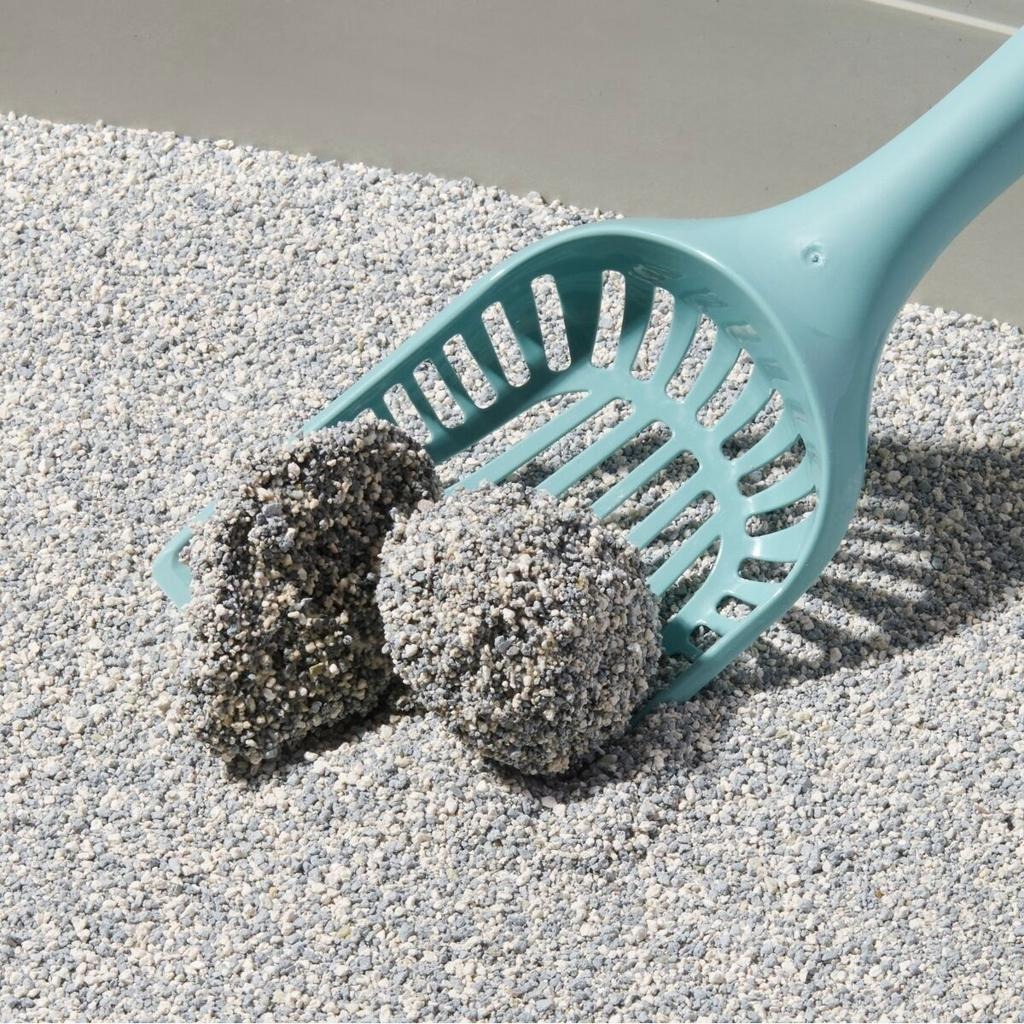
Empty the remaining litter into a suitable waste bag. Dispose of it according to local waste guidance rather than assuming it can be flushed.
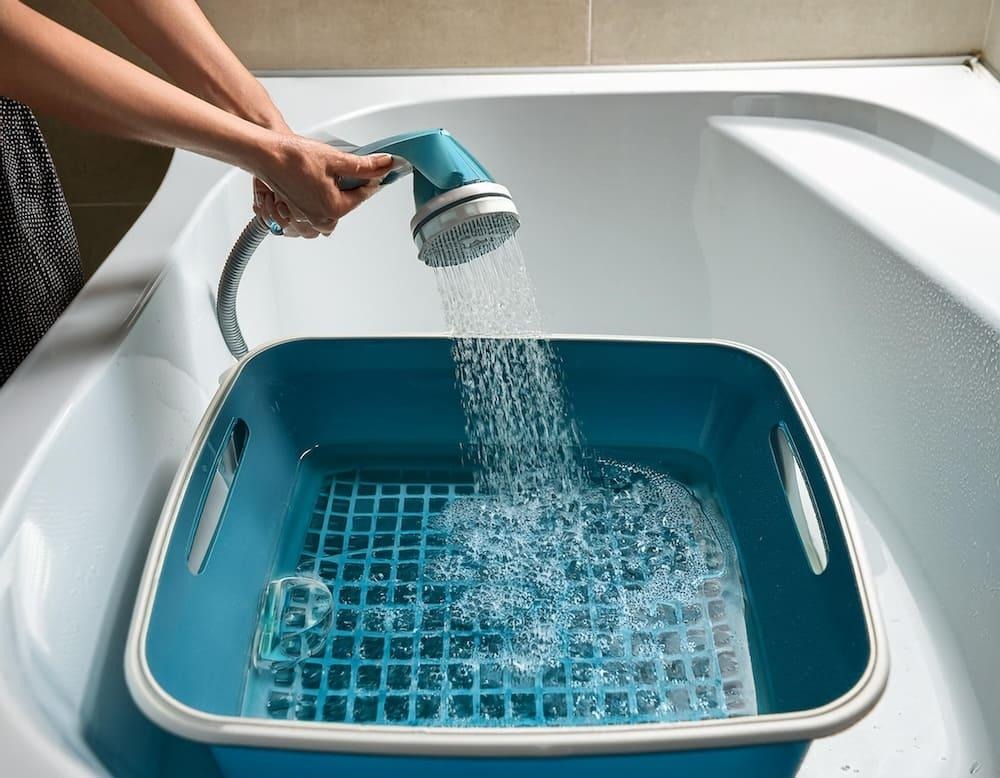
Clean the tray thoroughly, paying attention to corners and areas where urine residue may have collected.
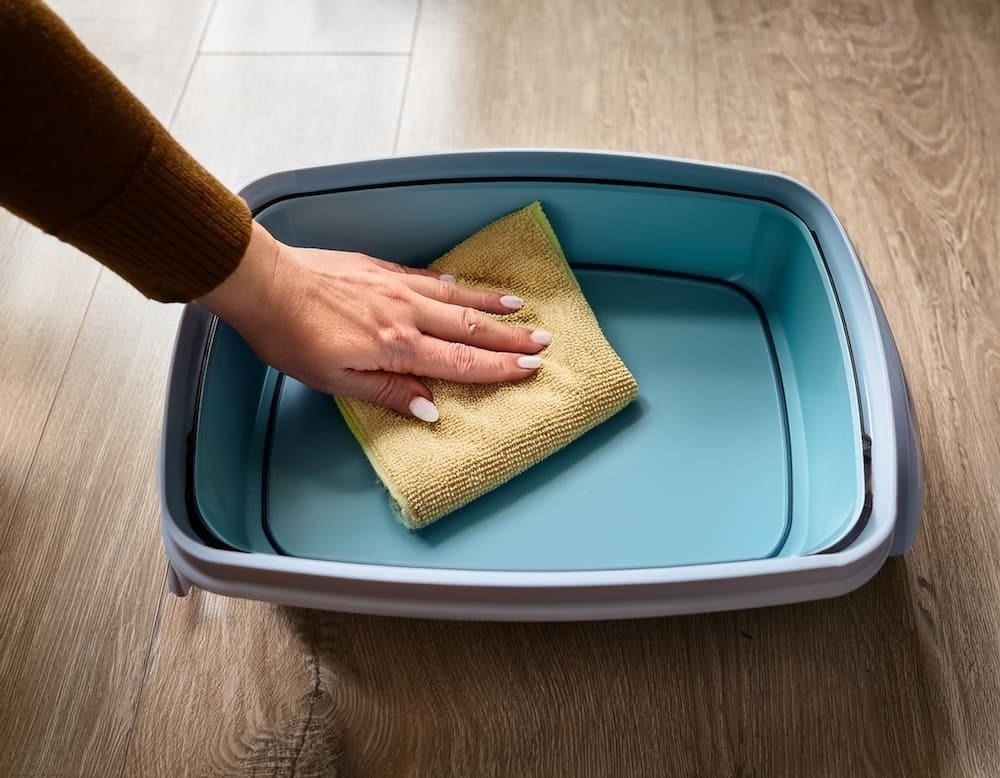
Remove cleaner residue and allow the tray to dry before refilling it.
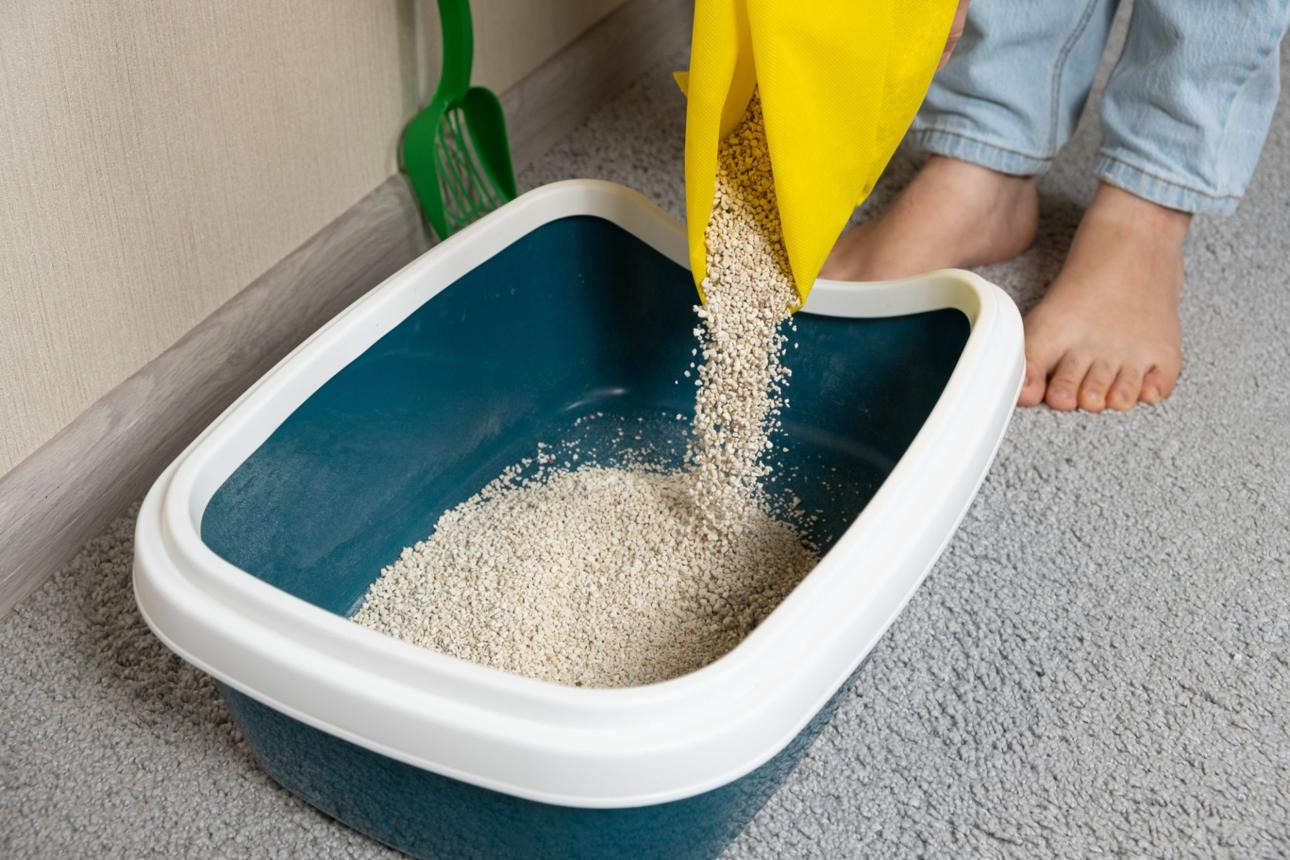
Follow the product’s fill instructions. Many conventional clumping litters use around 2–3 inches as a starting depth, but other materials may differ.
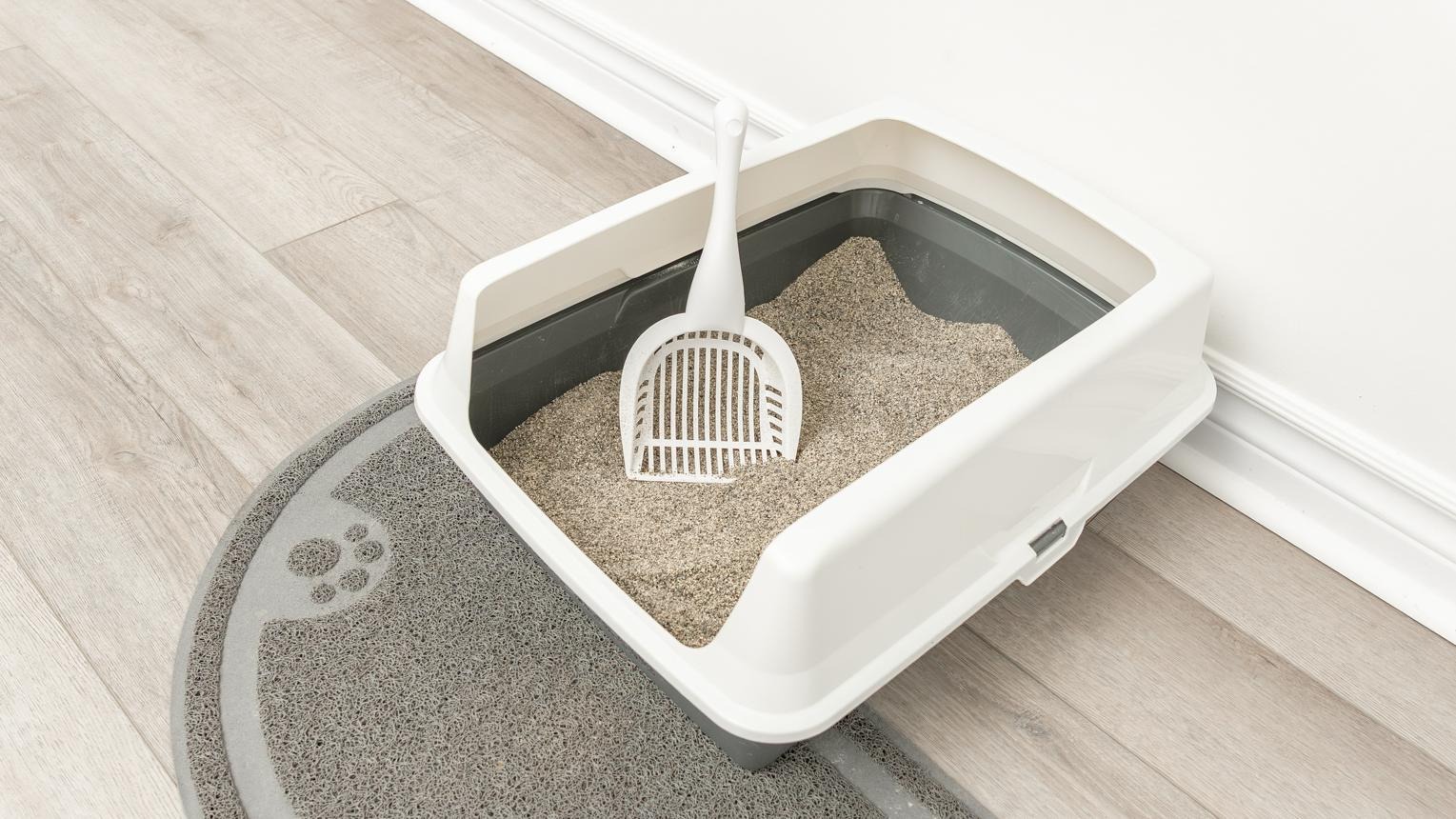
Resume regular scooping and check the litter’s depth and condition between full changes.
A good litter scoop can make daily waste removal easier, especially when using clumping litter.
When you scoop urine clumps, some litter leaves the box along with the waste.
As a result, the remaining depth gradually decreases.
For many conventional clumping litters, around 2–3 inches (5–7.5 cm) is a practical starting level, subject to the manufacturer’s instructions.
You don’t need to add a fixed amount after every scoop.
Instead:
Scoop → Check Depth → Add Fresh Litter if Needed → Level the Surface
For example, if the litter started at 6 cm and regular scooping noticeably reduces that depth, add enough fresh material to restore the appropriate level.
Remember that topping up only restores the amount of litter. It does not remove contamination from the remaining material.
For a more detailed measurement method, see our guide to how much cat litter to put in a litter box.
No. Added fragrance does not automatically make litter last longer.
Scented litter contains fragrance intended to change how the litter or surrounding area smells.
Unscented litter does not rely on added perfume.
However, both still need proper waste removal and replacement.
Fragrance ≠ Cleanliness
A scented litter box can smell pleasant while still containing waste and moisture.
Similarly, unscented litter can manage odors effectively through absorption, clumping, and regular cleaning.
When choosing between scented cat litter and unscented cat litter, focus on product performance, your cat’s acceptance, and maintenance requirements rather than scent alone.
If the litter box smells shortly after scooping, the problem may not be the visible waste.
Several factors can contribute to lingering odor.
| Possible Cause | Why It Happens | What to Do |
| Remaining urine-soiled litter | Small contaminated particles remain | Assess whether a full change is needed |
| Saturated non-clumping litter | Absorbed urine remains in the material | Replace according to condition and instructions |
| Dirty tray | Residue remains on the plastic | Wash and dry the box |
| Weak clumping | Clumps break and leave soiled particles | Evaluate litter performance |
| Insufficient cleaning | Waste accumulates between scooping sessions | Increase cleaning frequency |
| Poor ventilation | Odors become more noticeable | Improve airflow where practical |
| Multiple cats | More waste accumulates quickly | Maintain enough boxes and clean frequently |
Do not rely on perfume or deodorizing additives to compensate for a dirty litter box.
If odors persist despite appropriate cleaning, reassess the litter formula, box setup, and maintenance routine.
Strong odor is not the only sign that litter needs attention.
Check moisture, waste buildup, and litter condition regularly.
Topping up restores depth but cannot remove urine already absorbed into the remaining material.
Clumping, non-clumping, crystal, and plant-based litters may require different replacement routines.
A shallow layer can allow urine to reach the bottom of the tray, creating sticking and cleaning problems.
Overfilling may increase waste and cause litter to spill outside the box.
A maintenance routine suitable for one cat may not be enough for a household with several cats.
Even when the old litter is removed, residue may remain on the box.
Fragrance can change perceived smell but does not replace waste removal.
Making litter last longer shouldn’t mean leaving contaminated material in the box.
Instead, focus on using the right amount and maintaining it correctly.
Good absorption and clumping performance can make waste removal more manageable.
Removing waste before it accumulates helps maintain the remaining litter’s condition.
Avoid both underfilling and unnecessary overfilling.
A suitable scoop helps separate loose litter from urine clumps and feces.
Adequate box availability can reduce excessive use of a single tray.
Do not extend a product’s recommended replacement interval simply to save money.
The goal is to reduce unnecessary litter consumption while keeping the box hygienic and comfortable.
When buying cat litter in Pakistan, consider the ongoing cleaning routine as well as the initial price.
A lower-priced bag isn’t automatically more economical if it requires frequent replacement or performs poorly in your household.
Compare the following:
| Buying Factor | Why It Matters |
| Clumping performance | Affects how easily urine-soiled material can be removed |
| Absorption | Influences moisture management |
| Odor control | Helps manage unpleasant litter-box smells |
| Dust | Affects pouring and digging experience |
| Tracking | Influences cleanup around the box |
| Pack size | Determines how much material you have for fills and top-ups |
| Price per kg or liter | Helps compare quantities |
| Replacement needs | Affects ongoing consumption |
| Cat acceptance | The product must be comfortable for your cat |
Both imported and locally manufactured products should be evaluated using the same criteria.
Imported litter isn’t automatically better, and locally manufactured litter isn’t automatically less effective.
Look at the actual formulation, product instructions, clumping behavior, pack size, and cost per use.
For cat owners in Karachi, Purr Pet Food offers cat litter options that can be compared according to material, fragrance, and household requirements.
Before deciding whether to scoop, top up, or replace your cat’s litter, check the following:
Knowing how often to change cat litter helps you maintain a cleaner, more comfortable litter box without wasting usable material.
The most important distinction is between everyday cleaning and complete replacement. Clumping, non-clumping, crystal, and plant-based litters have different maintenance requirements, so always follow the manufacturer’s instructions and monitor the actual condition of the box.
A good routine removes waste promptly, keeps the litter at an appropriate depth, and replaces material when it is no longer suitable for use.