
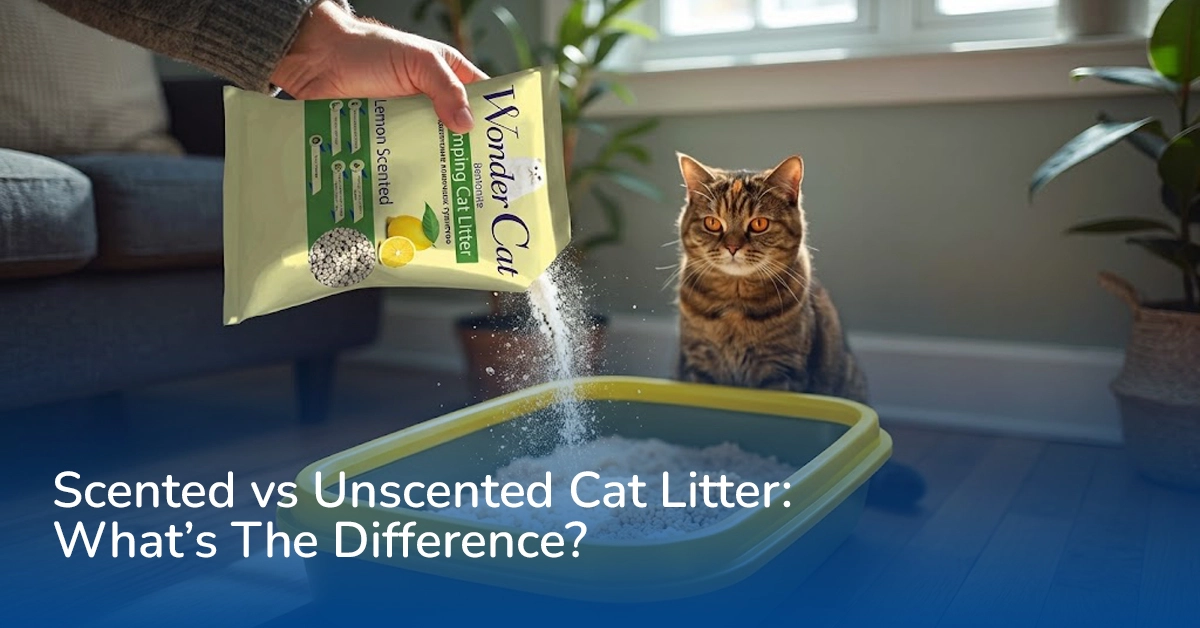
The main difference between scented vs unscented cat litter is added fragrance. Scented litter contains fragrance designed to change or mask the smell around the litter box, while unscented litter does not rely on added perfume.
But scent and odor control are not the same thing. A litter’s ability to manage odor also depends on absorption, clumping, waste removal, litter-box cleanliness, and how often the box is maintained.
So, which should you choose? The better option is the one that combines good litter performance with a scent and texture your cat is comfortable using.
Before choosing a litter, it helps to separate fragrance from other features such as clumping, dust, and tracking.
| Feature | Scented Cat Litter | Unscented Cat Litter |
| Added fragrance | Yes | No |
| Completely odorless | No | No |
| Odor control | Depends on formula and cleaning | Depends on formula and cleaning |
| Clumping | Depends on product | Depends on product |
| Dust | Depends on material and formula | Depends on material and formula |
| Tracking | Depends on granule size and weight | Depends on granule size and weight |
| Cat acceptance | Varies by cat | Varies by cat |
| Best suited for | Households comfortable with fragrance | Cats/owners preferring no added scent |
The key point is simple:
Scented or Unscented = Fragrance Choice
Clumping, Absorption & Cleaning = Litter Performance
For a wider explanation of litter materials, maintenance, odor, and selection, see our cat litter guide.
Scented cat litter is a litter formula with added fragrance.
Depending on the product, scents may include:
The basic idea is:
Cat Litter + Added Fragrance = Scented Cat Litter
The fragrance changes how the litter or surrounding area smells to people. It does not physically remove urine or feces from the litter box.
This distinction matters because a strongly fragranced litter can still develop unpleasant odors if waste remains in the box for too long.
Scent should therefore be considered one product attribute, not the complete solution to litter-box odor.
Cat owners who prefer fragranced options can compare Purr Pet Food’s scented cat litter range.
Unscented cat litter is formulated without added fragrance.
That does not mean the litter has absolutely no smell.
The litter material itself may have a natural odor, and urine and feces can still create smells after your cat uses the box.
So:
Unscented = No Added Fragrance
not:
Unscented = No Odor
An unscented formula can still provide effective odor management through absorption, clumping, and regular removal of waste.
If you prefer litter without added fragrance, explore available unscented cat litter options.
Not necessarily.
This is one of the most important differences to understand when comparing scented and unscented litter.
There are two separate processes:
Added Scent → Changes How the Litter Area Smells
Absorption → Waste Containment → Clumping → Waste Removal → Clean Litter Box
A scented litter may make the area smell more pleasant to an owner, but the fragrance does not replace proper cleaning.
For example, imagine two litter boxes.
One contains heavily scented litter but has not been scooped regularly.
The other contains unscented clumping litter, but urine clumps and feces are removed frequently.
The scented box is not automatically cleaner simply because it has a stronger fragrance.
A better approach is:
Remove the Odor Source > Mask the Odor Source
Litter-box odor is affected by several connected factors.
Litter needs to handle urine effectively. Poor moisture management can make the box harder to keep fresh.
With clumping litter, urine-soiled material can be removed as a separate mass.
This can help prevent soiled litter from remaining in the box.
Feces and urine clumps should not remain in the box unnecessarily.
Even regularly scooped litter eventually needs appropriate maintenance and replacement.
More cats generally means:
More Box Visits → More Waste → Greater Cleaning Demand
An unsuitable litter-box setup can create maintenance and odor problems that changing fragrance alone will not solve.
If odor is your primary concern, focus first on litter performance and cleaning, then decide whether you also want fragrance.
There is no single litter scent that every cat prefers.
Cats interact with litter more directly than their owners do. They stand in it, smell it, dig through it, and use it to cover waste.
Their response can depend on:
Some cats may comfortably use scented litter. Others may be more accepting of an unscented formula.
That is why the owner’s favorite fragrance should not be the only factor in the decision.
The ideal relationship is:
Good Litter Performance + Cat Acceptance + Manageable Cleaning Routine
Pay attention to changes in litter-box behavior, particularly after introducing a new product.
Possible signs of discomfort or dislike can include:
However, these behaviors do not prove that fragrance is the cause.
A cat may avoid its litter box because of:
A sudden change in urination or defecation habits should not automatically be treated as a litter preference problem. If the behavior persists or is accompanied by signs of illness or discomfort, veterinary advice is appropriate.
When it comes to daily litter-box cleaning, clumping and fragrance perform completely different jobs.
Clumping describes how litter reacts to moisture.
Scent describes whether fragrance has been added.
A litter can therefore be:
This is why you should not choose litter based on fragrance alone.
If easy urine removal is important, evaluate:
Our clumping vs non clumping cat litter guide explains this functional difference in more detail.
You can also learn more about what to look for when choosing the best clumping cat litter.
Bentonite and fragrance describe two different characteristics.
Bentonite = Litter Material
Scented/Unscented = Fragrance Attribute
Bentonite clay is commonly used in clumping litter because it absorbs moisture and binds wet particles together.
The process looks like:
Urine → Bentonite Absorbs Moisture → Particles Bind → Clump Forms
Manufacturers can then produce bentonite litter with added fragrance or without added fragrance.
So you may find:
Bentonite + Lemon Scent
Bentonite + Lavender Scent
or:
Bentonite + No Added Fragrance
If bentonite suits your cleaning routine, compare imported bentonite cat litter based on clumping, dust, tracking, scent, pack size, and price not fragrance alone.
Having several cats does not automatically mean you need stronger-smelling litter.
A multi-cat household creates:
More Cats → More Litter-Box Use → More Urine & Feces → Greater Maintenance Demand
The first priorities should therefore be:
Fragrance is a secondary consideration.
If your cats comfortably use scented litter, a scented formula may fit your household. If one or more cats appear reluctant to use strongly fragranced litter, an unscented option may be more practical.
For multi-cat households, compare more than scent. Our guide to the best cat litter for multiple cats covers clumping strength, odor management, dust, tracking, and heavy use in more detail.
Not necessarily.
Scent and dust describe different product characteristics.
Dust depends more directly on:
A scented bentonite litter and an unscented bentonite litter can have different dust levels even though both use the same general material.
Do not assume:
Unscented = Low Dust
or:
Scented = Dusty
Check the individual product instead.
Again, fragrance is not the main factor.
Tracking is more closely connected to:
Granule Size + Particle Weight + Cat’s Paws/Fur + Digging + Box Design
Fine or lightweight particles may behave differently from larger granules.
To reduce tracking, consider:
The best solution is one that reduces mess without making the litter uncomfortable for your cat.
Whether a litter works in an automatic box depends on the machine’s requirements—not simply whether it is scented.
More important factors may include:
For example, an automatic box designed for clumping clay may have different requirements from another self-cleaning system.
Always check the manufacturer’s instructions before changing litter.
A fragrance your cat accepts is useful only if the underlying litter is also compatible with the machine.
If you prefer unscented litter, you do not need to rely on perfume to manage the litter area.
Start with the source of the odor.
Remove feces and urine clumps where applicable.
Too little litter can reduce effective absorption and allow urine to reach the bottom of the box.
If you use clumping litter, replace the clean litter removed during routine scooping.
Scooping does not mean the remaining litter lasts forever. Follow product guidance and monitor its actual condition.
When performing a full litter change, clean the box appropriately before adding fresh litter.
This is particularly important in multi-cat households.
Loose litter, waste residue, and dirty mats can contribute to smells around the litter area.
A poorly ventilated litter area can make odors more noticeable.
The practical equation is:
Good Litter + Waste Removal + Clean Box + Suitable Setup = Better Odor Management
Avoid adding concentrated fragrances or essential oils to litter simply to make the box smell stronger. Cats interact closely with the litter, so use products according to their intended instructions.
Some cats adapt quickly to a new litter, while others are more sensitive to changes in smell or texture.
If your current and new products are suitable for gradual mixing, you can introduce the new litter progressively rather than making an abrupt change.
A simple transition looks like:
Current Litter → Introduce New Litter → Gradually Increase → Monitor Cat
Pay attention to:
Remember that changing from scented to unscented litter may also involve changes in material, granule size, or texture.
If possible, avoid changing several litter-box factors at exactly the same time.
For cat owners in Pakistan, choosing litter should also be practical.
Don’t compare products only by scent name or packaging.
Consider:
| Factor | What to Check |
| Material | Bentonite, clay, plant-based or other |
| Fragrance | Scented or unscented |
| Clumping | Strength and ease of scooping |
| Absorption | Moisture handling |
| Dust | Performance during pouring/digging |
| Tracking | How much leaves the box |
| Pack size | Suitable for your household |
| Price | Compare similar quantities |
| Cost per use | Consider actual consumption |
| Availability | Can you reorder consistently? |
| Cat acceptance | Does your cat comfortably use it? |
Imported litter is not automatically better because it is imported, and locally manufactured litter is not automatically better because it may cost less.
Compare the individual formula.
For Purr Pet Food customers in Karachi, the best choice is a litter that combines reliable availability with the characteristics your cat and household actually need.
Choose based on your cat first and fragrance preference second.
But neither label tells you everything about the product.
Before buying, ask:
The better litter is not necessarily the one that smells strongest. It is the one that performs well, fits your cleaning routine, and your cat willingly uses.
The difference is straightforward:
Scented Cat Litter → Added Fragrance
Unscented Cat Litter → No Added Fragrance
But choosing the right litter requires looking beyond smell.
Real litter-box performance depends on:
Absorption + Clumping + Waste Removal + Cleaning + Cat Acceptance
If your cat is comfortable with fragrance and you prefer it, scented litter can be a practical choice. If you or your cat prefer a litter without added perfume, an unscented formula may be the better fit.
Most importantly:
Fragrance changes how the litter smells. Good litter performance and regular cleaning address the source of litter-box odor.
Compare Purr Pet Food’s cat litter options by scent, material, clumping performance, pack size, price, and your cat’s individual preferences to find the right match for your home.
WhatsApp us